Dragon Quest VII Reimagined
| Main series games | |
|---|---|
| Dragon Quest VII Reimagined | |
 
| |
| Developer(s) | Hexadrive Co., Ltd |
| Publisher(s) | Square Enix |
| Designer(s) | Yuji Horii |
| Series | Dragon Quest |
| Platform(s) | Nintendo Switch, Nintendo Switch 2, PlayStation 5, Xbox Series X/S, Steam |
| Release date(s) | Nintendo Switch INT Febuary 5, 2026 PlayStation 5 INT Febuary 5, 2026 Xbox Series X/S INT Febuary 5, 2026 Steam INT Febuary 5, 2026 |
| Genre(s) | Console role-playing |
| Mode(s) | Single-player |
Dragon Quest VII Reimagined is the second remake of Dragon Quest VII, announced on September 12th 2025. Unlike the Nintendo 3DS remake released in 2013 that implemented modest balance adjustments compared to the original, Reimagined is a total reworking of the adventure that changes several elements to provide a different experience. Certain aspects that were added in the Nintendo 3DS remake have been retained, such as Ruff riding on the back of his adoptive mother and the unnamed Faerie guide dwelling in the Shrine of Mysteries, newly dubbed The Caretaker. A demo that covers up to the conclusion of the Ballymolloy scenario was released on January 7th, 2026.
New features[edit]
Presentation changes[edit]
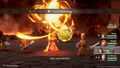
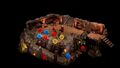
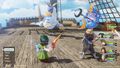
- Characters are displayed in a handcrafted artstyle and the environments are presented as dioramas, not unlike Square-Enix's Fantasian
- The proportionate size of characters in relation to the environments has been returned to the original PlayStation scale, compared to the compressed 3DS version
- The game is rendered in Unreal Engine 4 like many of Square Enix's recent games including Dragon Quest XI and the HD-2D remakes of the Erdrick Trilogy.
- A character's weapon and shield are now displayed in battle similar to Dragon Quest VIII and Dragon Quest XI
- Characters can equip alternate outfits similar to Dragon Quest XI S.
Character changes[edit]
- The Caretaker has more personality and a defined backstory, no longer being just a means to simplify the Shrine of Mysteries
- Pollock now has light brown hair instead of black
- Pike stockpiles water from Rainbow Cove to sell to his marks, terminating the infamous empty bottle problem from the original
- The story of the present-day Roamers has been altered so that Aishe joins the party much sooner than in past versions, before Sir Mervyn
- Barbatoses and fandangows now have their usual appearance, compared to both prior versions of the games where the former monster was flesh colored and the latter monster was blue colored.
Scenario changes[edit]
- The Castle Estard bank has been replaced with a mini medal exchange, granting players access to prizes much sooner
- The process of opening the Shrine of Mysteries has been altered considerably:
- Kiefer has filched the sizzling stone off of Pike and brought a tablet fragment with him, using both on the statue after his late mother's ring doesn't work, saving the player the trouble of walking back and forth across Estard to acquire them
- A voice speaks through the statue and instructs the Hero and Kiefer to complete puzzles hidden through the island to obtain three fragment shards in order to be granted access to the shrine. Eventually, the voice that instructed them through the statue is revealed to be The Caretaker when Auster and Kiefer finally gain access to the Shrine of Mysteries.
- Dermot the hermit has locked the way to one of these puzzles after being unable to complete it in his youth
- Beyond the opening the game is considerably more non-linear than before, allowing players to tackle the problems of the past in nearly any order provided the requisite tablet fragments have been found
- The player also has more agency within a given island scenario than before. For example the player's decisions influence the strength of the boss sealing Ballymolloy and the ending of that adventure can be slightly altered
- The Rainbow Cove is now accessible from the overworld, instead of needing to enter through the Shrine of Mysteries
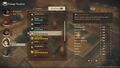
- Fragment locations have been changed and a checklist has been added to the system menu to keep track of them
- Regenstein, Greenthumb Gardens, Vogograd, and Nottagen were made optional and removed from the main storyline.
- Due to El Ciclo's removal from the game, the second visit to Greenthumb Gardens thirty years later takes place immediately after the first.
- A new alternate ending for Vogograd has been added, which causes its citizens to preserve the truth instead of twisting it.
- The Pillar of Sulkk has been removed from Nottagen, making Moostapha responsible for the darkness covering the island instead of Sulkk.
- New boss battles added such as Florin's new monster form
- New scenarios that elaborate on the Hero and Maribel's childhood have been added
- New scenario featuring an older Kiefer has been added, with the option to have him rejoin the party as a guest in the Cathedral of Blight.
- A battle arena has been added, with one section including the three archfiends from the Erdrick Trilogy
- Several new monsters have been added to the game's bestiary in addition to the three archfiends, ranging from common enemies such as slimecicles and toadies to boss characters such as Atlas, Robbin' 'Ood, and even Xenlon
- The fog over Vogograd at Mount Gora by Gasputin is now generated by hammerhoods instead of forky pigs
Cut content[edit]
- The woodcutter and his cabin east of Pilchard Bay have been removed.
- The El Ciclo, Gröndal, & Providence scenarios have been removed.
- The Time Being and Grody Gumpdrops have been moved from Inside the Time Frame in El Ciclo and Grody Grotto in Greenthumb Gardens to the Malign Shrine and Cave to Another World, respectively.
- The casinos, the Excellence Grading Organisation, the Immigrant Town, and Monster Meadows sidequests have been removed, though the prizes originally acquired through these sidequests have been retained and are available through other methods. Bonus equipment that was added in the Nintendo 3DS remake is also retained[1]
- The vocation uniforms seen in the 3DS version have been removed, with characters retaining their default appearance as in the PSX original
Battle changes[edit]
- All five heroes can now travel together, with the fifth being a backup character to be swapped in at will during battle
- Just like the 3DS remake, random encounters have been replaced with on-screen monsters
- The player can now attack monsters outside of battle for minor damage and even one-shot weaklings, similar to Nintendo's Paper Mario
- Monsters defeated this way can still drop their items as normal
- Characters now have their actions selected individually once their turn comes up as in Dragon Quest XI, instead of the party's actions being selected together at the start of a turn
- New spells have been added, such as the Crag, Deceleratle, Frizz Cracker, Kerfrizz, & Moreheal spells, and fourth-tier attack spells such as Kaswooshle
- The Woosh-family of spells now target random foes instead of a single group. The range increases by tier, such as Woosh hitting 2~3 foes & Swoosh hitting 2~4
- New skills have been added, such as Clap Trap, Hip Drop, Hymn of Light, and Kiss Me Deadly
- Certain abilities have had their MP cost rebalanced, such as Maelstrom taking 16 MP instead of 12
- The Charm, Deftness, Magical Mending, and Magical Might stats have been added
- Shields have a chance to block 100% of a physical attack's damage as in Dragon Quest IX, Dragon Quest X, and Dragon Quest XI
Vocation changes[edit]
- Vocation advancement is no longer based on the number of battles fought while in a given profession, instead using a secondary experience point system where stronger enemies award more points than weaker ones
- New exclusive starter vocations have been added for every character to increase their ability repertoire in the early portions of the game before accessing Alltrades Abbey
- For example Ruff starts in the Wolf Boy (オオカミ少年) vocation and Aishe begins as Destiny's Dancer
- Characters can now take up two vocations simultaneously in a featured dubbed moonlighting
- All vocations now feature exclusive perk abilities that trigger when a character is thoroughly worked up in battle and selects the Let Loose command, ranging from powerful attacks to life-saving buffs
- All spells and skills learned through a vocation are now tied to that vocation, meaning for instance that a Pirate will not be able to perform the Flying Knee skill unless the character is also moonlighting as a Martial Artist. This restriction is stricter than that found in the Nintendo 3DS remake, in which all abilities learned through beginner-grade vocations were permanently available to a character, but it also adds another layer of strategy in assigning vocations and reduces the overabundance of techniques that cluttered a character's command menu in past versions of the game
- The Hero's exclusive spells, The Great Leveller and The Greater Leveller, are permanently tied to him regardless of his vocation
- Monster vocations have been removed and monster hearts have become a new type of accessory that grant monster-themed traits to characters, similar to the Monster Battle Road badges in Dragon Quest X and medals in Dragon Quest Treasures
- The Monster Master vocation replaces the Monster Masher vocation
- Characters can change vocations on the fly after being given the career sphere by High Priestess Jacqueline, which is automatically assigned to a shortcut button. Using it will allow Jacqueline to telepathically change a character's vocation, and in the present her descendant Jacqui will handle the duties
Miscellaneous changes[edit]
- You can pet the cats and dogs by interacting with them, in keeping with the Hero's kindly nature.
- Zoom now functions as it does in the HD-2D remakes of the Erdrick Trilogy, allowing the player to fly to shrines and dungeons as well as towns and castles. It can now be used in the past as well, though the player cannot travel outside of an island's scenario
Development[edit]
In a video presentation posted to the official Square-Enix youtube channel after the game's launch, producer Takeshi Ichikawa, director Masato Yagi, and lead scenario writer Sayaka Takagi shared their thoughts on Dragon Quest VII and their intent behind the Reimagined project. Ichikawa explained that Dragon Quest VII was given priority for being remade to celebrate the milestone of its 25th anniversary and further elaborated how the dark and irrational world depicted within the game matched the tumultuous modern era of the real world also contributed to the the remake being greenlit for production[2]. Yagi reflected that the type of bleak world shown within Dragon Quest VII is quite rare for the series, but reflected that being able to find hope within that bleakness is one of the game's defining aspects and approached the project with intent to preserve this feeling[3]. Takagi found that the title's main theme is that even a nobody can become somebody and find his or her place in the world, likening this to Dragon Quest IX, and highlights how the main characters come from all walks of life to emphasize this[4].
In an earlier video published on the day of the game's announcement, Ichikawa stated that the subtitled of "Reimagined" was chosen as the game changed so much of the original's content. The narrative has been reworked extensively, with new scenarios being added while others were removed to improve the original game's infamous pacing. Yuji Horii notes that searching for fragments is much easier than before. Real-life figurines were scanned to create the in-game models for the six main characters, with the developers dubbing this approach the "diorama style". These figurines were created by Studio Nova, a celebrated atelier company founded in 1970[5], and the studio's work was then used as the template to base the secondary characters and monsters on. A panel previewing the game was held on September 26th 2025 for the Tokyo Game Show, and live-streamed on youtube. During the panel Horii announced which scenarios and features from past versions of the game would be cut for this remake, in addition to showing footage exploring Aeolus Vale.
In an interview with V Jump magazine Ichikawa explained that the use of dolls and dioramas came about once he discovered games that used such methods for their own art style, and felt it was an appropriate match for the pseudo-chibi character designs Akira Toriyama created for the PlayStation version. Each doll took several months to complete, beginning with a rough model that was made to match the original illustration's proportions and reworked until it became satisfactory while the texture of its clothing was finalized.[6]. The diorama style for the game's environments was implemented to match these dolls, with Ichikawa intending for players to feel like they are exploring a miniature garden [7]. Director Yagi found it difficult to fine-tune the look of the dolls as making them too cute would undermine the dark atmosphere of the game, and worked extensively with the art team through a lengthy experimentation process until the proper balance was found[8]. The other characters, environments, and monsters were designed to match the dolls and enabled the development team to push for a high degree of texture realism that didn't compromise the game's atmosphere[9]. Takagi maintained a similar commitment to preserving the atmosphere through her writing, finding that tragedy and comedy are always side by side. To this she added a certain degree of sadness to the scenarios that end on a happy note through the hardships of the side-characters while also including a small piece of hope to the conclusions of the scenarios that otherwise end in melancholy[10].
A main goal of the project was to trim down the original's infamous size to make it more approachable and faster-paced to play. To this end it was proposed to remove scenarios that were less relevant to the overarching narrative became optional side quests and certain scenarios were cut altogether, resulting in a denser structure that did not lose its focus[11]. Horii made many proposals on the game's new structure over the course of development and reviewed the ideas pitched by the main creative staff―Ichikawa, Takagi, & Yagi―in order to fine tune the game, finding the trio to be so capable that he entrusted the game's storyline to them[12]. One of Horii's main priorities in altering the game's structure was to have Aishe join the party much sooner than before: this decision was made on the grounds of her joining so late in previous versions meant players did not truly get the feeling of travelling with her and because he found the lengthy stretch where the party is just a three-man team to be unsatisfactory. To this end the story was altered so the three-man party phase was shortened to just the Alltrades Abbey and Al-Balad segments right after Kiefer leaves, with additional embellishments given to Aishe and the Roamer's scenario[13].
Ichikawa proposed to Horii that Kiefer return to the group as an adult very early in the game's development, citing that many players were curious of what became of the Prince after his sudden departure. Horii reflected that the last word from Kiefer was the message he left behind on a tablet in the game's ending, and agreed to the idea. This lead to a brainstorming session to hammer out the details on the timeline of events from Kiefer's perspective and his middle-aged design, with Horii highlighting his facial hair as a key element[14]. The flashback scene that shows how the Hero and Maribel became friends when they were small children was written to give the girl some added depth and to explain her beginnings as a pioneer tsundere in Japanese media [15]; this new scene replaces the lengthy portion of the game where Maribel leaves the party to tend to her sick father with a brief scenario that never leaves Pilchard Bay. This new scenario has the added benefits of giving depth to Maribel's parents and to Pearl, the Hero's mother, while also eliminating the infamous design flaw where players could soft-lock themselves out of the game dozens of hours into the story if they accidentally left the empty bottle in Maribel's inventory when she leaves the party.
In the team's approach to rebalancing the game's battles the small-fry encounters were designed to be quick and simple skirmishes while the bosses would take a slower and more methodical pace. The moonlighting system was implemented to expedite character growth by allowing party members to undertake two career paths simultaneously, which added the secondary benefit of encouraging players to experiment freely with character and vocation combinations now that advancement was no longer such a lengthy process. The career sphere was implemented to further encourage player creativity and to eliminate having to backtrack all the way to Alltrades Abbey to change vocations when faced with a difficult boss fight. The character of Jacqui, the distant descendant of High Priestess Jacqueline, was created to replace the generic abbot who manages vocation changes in the modern day Alltrades Abbey in response to the notably popularity of Jacqueline, with some players even returning to the past to have her change the party's vocations[16]. The replacing of the Monster Masher vocation with the Monster Master stemmed from the development team wanting to create a vocation with abilities that would summon monsters to fight on the behalf of the party; Horii was delighted with the unpredictability of these summoning skills and likened them to a game of battle pencils. As the nature of the new vocation implies recruiting monsters instead of hunting them[17], the Masher was swapped out entirely instead of simply being fitted with new abilities.[18]
The Let Loose command came from the development team desiring to create a distinct system for VII Reimagined that would be comparable to the Tension and Pep systems seen in Dragon Quest VIII and Dragon Quest XI. As special moves have become common to the series, such as with souped-up skills, it was decided to tie these powerful techniques to the vocations instead of the characters to add another layer of strategy when assigning professions to a party member[19]. The vicious monsters were added to the game as an extra challenge that can scale to the difficulty of the island on which they are found and also serve as a means to obtain the repurposed monster hearts as a reward. As monster vocations were removed from this iteration of Dragon Quest VII, Horii proposed using the hearts as a new type of accessory akin to the ones found in Dragon Quest Walk[20]. As overseas ratings boards have become very strict in allowing depictions of gambling in games rated for children, the various casinos were removed as the monster arena betting system had been in Dragon Quest III HD-2D Remake. The lucky panel was spruced up to serve as a replacement means to amass powerful items, and a battle arena was implemented in Buccanham to replace its casino with another type of challenge for battle-hungry players[21]
Trivia[edit]
- The game's opening cinematic features a panning shot of the Hero, Maribel, & Kiefer resting on the steps leading to the Shrine of Mysteries. As the camera pans to Kiefer it lingers on him flicking a seed or nut into his mouth, a cheeky reference to his reputation as a "seed thief" (種泥棒) among fans
Gallery[edit]
Promotional images[edit]



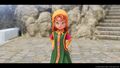


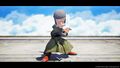
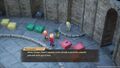

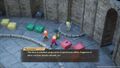




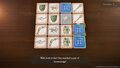
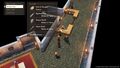



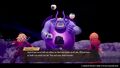
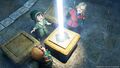
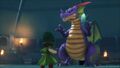




Maribel's day off dress, available through the demo
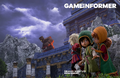
Game Informer cover art

Tokyo Game Show 2025 photo stand, featuring the Dragonlord

TGS 2025 display case housing the dolls used to create the main cast

A wider shot with the entire cast

A close up of the Maribel doll

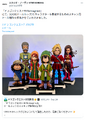
Studio Nova announcing its involvement with the game

TGS 2025 poster ad revealing several newly added monsters

Jump Festa 2026 booth

Collaboration art by Final Fantasy illustrator Tetsuya Nomura

Promotional art by the Warriors of Eden author Fujiwara Kamui.

Yuji Horii and Yoshinori Kitase in a Famitsu interview


Characters[edit]


Promotional events[edit]
SHIPS[edit]
On January 27th 2026 the Japanese fashion label SHIPS announced that it would be producing merchandise for a collaboration with VII Reimagined. The centerpiece is a navy blue slime plush, serendipitously celebrating the nautical theme shared between the company and game.


Collab window display

King slime photo booth


ZONe ENERGY[edit]
On January 28th, 2026 ZONe ENERGY announced it would be producing limited edition cans of its chief energy drink flavors to coincided with the release of VII Reimagined, including one based on a metal slime.


Kameda persimmon seeds[edit]
The Kakinotane company announced a collaboration with the game on January 30th, 2026, in which its persimmon seeds would be sold as seeds of strength and seeds of agility. Humorously, the social media for the promotion advises against wasting any on Kiefer.


Shinagawa station[edit]
From Febuary 2nd through the sixteenth, Shinagawa station hosted a display case containing the dolls created for the six main characters. Several trains were also decorated to advertise the game

A rendering of the display case at the station

A train compartment decorated with VII Reimagined branding


References[edit]
- ↑ Q:本作取消了如怪物公园、世界排行榜协会之类的功能,社区中一些玩家对这些删减感到惋惜,那为什么会有这些删减?原作中这些系统下的奖励内容,在重制版中能以其他方式获得吗? A:为了让玩家有更“浓密”(原文为浓密,或指内容密度够多)的剧情体验,我们有考虑过如何调整这些剧情以外的游玩内容,最后选择重新构筑这些内容。这次的重制版保留了“幸运面板”(ラッキーパネル)的内容,同时也对战斗玩法进行了翻新,增加了“斗技场”玩法,他们都以支线形式进行添加,让游戏更具乐趣。 至于那些原有系统的奖励,包括3DS版的那些奖励装备,也都会包含在这次的重制版中。在获取这些装备的过程中,玩家也能有与原版不太一样的体验。https://www.gamersky.com/news/202511/2048812.shtml
- ↑ 本作をリメイクしようとした理由なんです けども、今年で、えっと、オリジナル版 発売から25年経つ、え、節めの年でも あるんですけども、あの、今の時代だから こそドラゴンクエスト7が持っている、ま 、ちょっとダークな不利がちりまめられて いる世界観っていうのが、あの、マッチし てるかなという風に思いましてリメイクさ せていただきました。 https://www.youtube.com/watch?v=TlSiLOqewX4
- ↑ そのダークな世界観 って結構ドラゴンクエストとしては珍しい 世界観だったりするんですけど、その ダークな世界観の中から希望とかを見出せ るっていうのがドラゴンクエスト7の すごくいいところだと思うんですね。なの でそういったところはあの崩さないように やるべきだなと思っています https://youtu.be/TlSiLOqewX4?si=wTFXFGv1GYJbhwB8&t=24
- ↑ 今作の メインテーマは9作と同じで、ま、人は誰 かになれるというところが1番の大きな テーマかなと思いま何者でもなかった少年少女や、え、旅人が、え、旅を通して大きく成長して自分がやるべきこと、いるべき場所っていうものを見つけてその場所へ帰っていくという物語、その流れが、え、 1番のテーマかなと思います。https://youtu.be/TlSiLOqewX4?si=rv1Wx8EJkLi0qotn&t=45
- ↑ https://x.com/stnova1970/status/1971427702130577704
- ↑ — 東京ゲームショウ2025には、実際に作ったパーティメンバーの6体が展示されていました。 堀井: や壁の質感がすごくリアルですよね。ちゃんとい込まれた感じが出ているんですよ。 市川: キャラクターのモデルの原型になるものなので、のちょっとスレた感じまでじっくり検討をしたうえで製作しています。鳥山先生のイラストから設計図を起こして、そこから原形を作りつつ、服に使う布の素材などのパターン出しをして、それを組み合わせて人形を作り上げていったので、1体ごとに数か月単位の時間をかけました。ドラゴンクエストセブン Reimagined GUIDEBOOK to NEW WORLD (Vジャンプブックス(書籍) ISBN-10: 408779833X
- ↑ 市川 :『DQVII』はどうしても探索が長くなりがちなので、ゲーム全体のボリュームをコンパクトにまとめたほうがテンポ良くプレイできると思い、ドールに合わせてジオラマ感を出して、箱庭のような世界を冒険するようにしました。 堀井: ジオラマ世代なので、あの町も実際に作って欲しいな。ドラゴンクエストセブン Reimagined GUIDEBOOK to NEW WORLD (Vジャンプブックス(書籍) ISBN-10: 408779833X
- ↑ あんまりやりすぎるとこう可愛らしくなっ ちゃうので、なんかおはせっかくのダーク な世界観を潰しちゃうんじゃないかなって いうところがあったんですね。ま、もう 乗り越え方としてはもう本当にずっと思考 錯誤していてアートチームとかもう協力し ながら、ま、こういうエフェクトを入れ てったらいいんじゃないか、こういう ライティングにしたらいいんじゃない かっていうところで本当にずっと思考錯誤 してチャレンジし続けてようやくあ、この 感じであればこの雰囲気であればその ドールルックも生かしつつそのダークな 世界ストーリーも https://youtu.be/TlSiLOqewX4?si=j8vd-afNYbyyPUrG&t=163
- ↑ — パーティ以外のキャラクターやモンスターも、ドールルックになっています。 市川: パーティキャラクターのドールルックに合わせて、他のキャラクターやモンスター、景観をCGで制作しました。特にモンスターは、ゴーレムの岩っぽい感じやスライムのプニプニ感など意識していました。実際のドールをスキャンすることで、布や革の独特な質感をよりリアルに表現できただけでなく、ドールに合わせて素材感を意識したモンスターや住民たち、や村も出来上がったので、良い試みだったと思います。 ドラゴンクエストセブン Reimagined GUIDEBOOK to NEW WORLD (Vジャンプブックス(書籍) ISBN-10: 408779833X
- ↑ 潰すこともなく 悲劇と奇劇の常に隣合わせにあるものだと は思っていますので、え、悲しい物語をも 、え、書く時にも最後には少し救いがある ような、え、書き方をしますし、 ものすごく楽しい、嬉しい。なんかそう いうハッピーな物語を書く時もメインに ない、メインストリームにいない人は少し 悲しい思いをしていたりとか、少し悩む ところがある、え、困ったことがあると いうような、え、表立一体の部分っていう のを常に、え、意識して作成しています。https://youtu.be/TlSiLOqewX4?si=Bepa-x4R6plHbM8t&t=228
- ↑ — シナリオに関しては、どのように考えて再構築をしていったのでしょう? 市川: 色々と組み替えつつも、オリジナル版の空気感や散りばめられた独特なダークな雰囲気を壊さないように気をつけました。物語の本筋は変えないように意識して再構築しています。オリジナル版は100時間超えの膨大なシナリオでしたがショートストーリーの連続という構成だったので、それを組み替えることによってより濃密にテンポ良くプレイできるように調整しました。 堀井: オリジナル版は作り込みすぎたイメージがありましたから、シェイプアップみたいな形ですね。 市川: そうですね。本筋と関わりの薄いシナリオのいくつかは任意でいつでもプレイできるようにし、いくつかはカットしましたが、追加エピソードを用意して、よりキャラクターの深掘りをして、オリジナル酸をプレイした人にも新鮮なシナリオ体験になるように調整しています。より没入してお楽しみいただけるように、開発にもお願いをしてムービーも多めに入れていただきました。 ドラゴンクエストセブン Reimagined GUIDEBOOK to NEW WORLD (Vジャンプブックス(書籍) ISBN-10: 408779833X
- ↑ — シナリオの変更や再構築に関して、堀井さんからアドバイスなどはされたのでしょうか。 堀井: ある程度おせして、色々と提案をしてもらって、それを確認していきました。 市川: シナリオ担当とディレクターとの3人で話をして、適査、堀井さんに提案をさせていただきました。 堀井: みなさん能な方なので、もうお任せして安心という感じでした。ドラゴンクエストセブン Reimagined GUIDEBOOK to NEW WORLD (Vジャンプブックス(書籍) ISBN-10: 408779833X
- ↑ — アイラとメルビンの加入順を変更したのはなぜなのでしょう? 市川: 一時的に主人公とマリベル、ガボの3人パーティで物語を進めるパートがあるのですが、オリジナル版と3DS版では3人パーティの期間が長いように感じていました。アイラが加入するタイミングが物語の後半で、アイラと一緒に旅をしている感覚が薄いという想いもあり、3人パーティの期間を短くして、できるだけアイラとも長く険できるようにしたんです。 堀井: アイラが加入するタイミングを草めたいと提案されて、それはいい再構築だなと思いましたね。ドラゴンクエストセブン Reimagined GUIDEBOOK to NEW WORLD (Vジャンプブックス(書籍) ISBN-10: 408779833X
- ↑ — 大人になったキーファシナリオの追加は驚きでした。 市川: キーファのその後が気になる人は多いと思うので、堀井さんにシナリオを再構築するという提案をしたのとほぼ同時期に、追加シナリオとして大人になったキーファのシナリオも提案したんです。 堀井: これまでは、最後にアレがあるだけでしたからね。キーファのその後の部分を厚くすると、ファンの方にも喜んでもらえると思いました。 市川: 時系列がどうなっているのか、非常に作るのが難しかったのですが、整理しつつ追加させてもらいました。 堀井: 髭が生えたビジュアルが、イケオジ的でいいですよね。 市川: 少年キーファから20年ぐらい経った設定でキャラクターデザインしています。 堀井: 再会も衝撃的で、普通の仲間じゃないところがいいですよね。実はオリジナル版では、キーファはもっと後半に仲間から外れる予定だったんです。でも後になるほどレベルも上がっているし、色々な物を持っていってしまうので、自分的には早めたつもりでしたが、それでもタネ泥棒とか言われてしまいましたね(笑)。 市川: 本作ではタネもすべて、しっかり返してくれます。 堀井: だから気にせずに、キーファにタネを使ってください! ドラゴンクエストセブン Reimagined GUIDEBOOK to NEW WORLD (Vジャンプブックス(書籍) ISBN-10: 408779833X
- ↑ — ほかにも、追加されたシナリオがありますね。 市川: 幼なじみの主人公とマリベルの、幼少期のエピソードを追加しています。本作のヒロインであるマリベルの奇愛らしいエピソードが加わったことで、よりキャラクターに深みが増したと思います。 堀井: どうしてマリベルをああいう性格にしたかというと、オリジナル版の「DQVII」から仲間との会話を追加したからなんです。仲間と会話ができるのに普通の女の子だとつまらないじゃないですか。ヒロインに、ボロクソに言われたほうが楽しいと思ったんです(笑)。当時は「ツンデレ」という言葉なんてない時代ですから、今考えると「ツンデレ」の走りでしたね。 市川: マリベルは、ズバッとプレイヤーの気持ちを代弁してくれますからね。マリベルもガボも、会話で意外と芯を食ったことを言ってくれるのが面白いですよね。ドラゴンクエストセブン Reimagined GUIDEBOOK to NEW WORLD (Vジャンプブックス(書籍) ISBN-10: 408779833X
- ↑ — バトルや職業に関しては、どこにこだわって再構築したのでしょう? 市川: バトル全体の方針として、通常の戦闘はサクサクプレイできて、強敵戦はじっくりプレイできるようにしたいと考えました。さらに物語が進むと、2つの職業をかけもちできるように再構築しています。オリジナル版や3DS版では、ある職業がMAXになってから違う職業に転職したり、上位の職業が解放されて転職したりすると、一時的にキャラクターが弱くなってしまうというジレンマがありました。そこで本作では2つの職業を“かけもち”可能にすることで、弱くはならずに、より気軽に転職を楽しめるようにしています。さらに今回はダーマの水晶を使うとダーマ神殿に行かなくてもどこでも転職ができるので、強敵戦前にベストなプリセットにもできますし、職業の育てかたの幅も広がっています。 堀井: たしかにオリジナル版だと、熟練度がMAXになったら、その職業で戦うのがもったいないような気持ちになりましたからね。いいアイデアです。 市川: 転職といえば、オリジナル版や3DS版ではフォズに会うためにわざわざ過去のダーマに行って転職をする人がいるほど、フォズが人気だったじゃないですか。 堀井: フォズは、人気がありましたね。 市川: 本作ではフォズの後継者として、ミレッカというキャラを登場させています。なかなかいいキャラになっていますし、ミレッカも人気が出て欲しいですね。 ドラゴンクエストセブン Reimagined GUIDEBOOK to NEW WORLD (Vジャンプブックス(書籍) ISBN-10: 408779833X
- ↑ In Japanese the vocation is called the Monster Hunter (魔物ハンター Mamono Hantā) which implies being a specialist who tracks down monsters, an aspect lost in the English localization name
- ↑ — 職業から魔物ハンターがなくなり、まもの使いが加わったのはなぜでしょうか? 市川: 職業の個性を一新する上で、魔物を召喚するような職業にしたいと開発から提案をいただき、堀井さんにも箱談をして魔物ハンターではなく、まもの使いにしました。魔物を呼んだ時は、昔のバトエンを回しているようなランダム感があって、個人的にも楽しいなと思っています。 堀井:「スライム呼び」で大当たりを引くと、メタル系の スライムが出て来ますからね。 市川:そうなんですよ。メタル系のモンスターは登場すると敵側に移動します。倒せばもちろん多くの経験値がもらえるので「スライム呼び」を是非使って欲しいですね。 ドラゴンクエストセブン Reimagined GUIDEBOOK to NEW WORLD (Vジャンプブックス(書籍) ISBN-10: 408779833X
- ↑ — 職業ごとの職業とくせい、バーストチャージという新システムも登場しました。 市川: バトルの中で、『DQVIII』から登場したテンションや「DQXI」のゾーンのように、盛り上がりとメリハリが欲しかったんです。それに必殺技のような仕様は入れたいと思いました。『DQVII』は職業がとても特徴的なので、職業に紐付けるのが良いのではないかということで、今回のバーストの仕様になりました。 堀井: 職業とくせいは、どの職業を選んでも職業ごとの楽しみがあるところがいいんですよ。 市川: そうですね。職業ごとに特徴が際立つような職業とくせいがついています。かけもちすると、バーストチャージした時に2つから選べるようになっていますが、どちらにするかその時の状況で選んで欲しいです。 ドラゴンクエストセブン Reimagined GUIDEBOOK to NEW WORLD (Vジャンプブックス(書籍) ISBN-10: 408779833X
- ↑ — “強モンスター”という新要素と、新しくなったモンスターの心も登場します。 市川: せっかくバトルが新しくなったので、チャレンジできるバトルを用意しようと考えて、フィールドに強モンスターを出現させました。 堀井: かなり強いので、軽はずみに挑むと結構痛い目を見るんですよ。 市川: 倒すとモンスターの心が手に入ります。オリジナル版や3DS版ではモンスター職に転職するためのアイテムだったのですが、今回は人間職だけにしたので、モンスターの心をどうしようか堀井さんに相談したんです。その時にアクセサリーにしたらどうかとアドバイスをいただきました。 堀井:『DQウォーク』にもモンスターの心がありますし、みなさんお馴染みかなと。 ドラゴンクエストセブン Reimagined GUIDEBOOK to NEW WORLD (Vジャンプブックス(書籍) ISBN-10: 408779833X
- ↑ — 新要素・闘技場も登場しています。 市川: オリジナル版のミニゲームで特徴的だったラッキーパネルを残しつつ、新しい寄り道要素を追加したいと思いました。バトルを再構築したこともあって、そのバトルを生かした寄り道要素として闘技場を追加することにしました。 ドラゴンクエストセブン Reimagined GUIDEBOOK to NEW WORLD (Vジャンプブックス(書籍) ISBN-10: 408779833X