Dragon Quest VI: Realms of Revelation: Difference between revisions
No edit summary |
Antiyonder (talk | contribs) No edit summary |
||
| Line 3: | Line 3: | ||
| type = Main series games | | type = Main series games | ||
| title = Realms of Revelation (NA)<br>Realms of Reverie (EU and AUS) | | title = Realms of Revelation (NA)<br>Realms of Reverie (EU and AUS) | ||
| image = [[File:DQVI_Logo.png| | | image = [[File:DQVI_Logo.png|250px|center]][[File:DQVI cast.png|250px|center]] | ||
| caption= | | caption= | ||
| developer = [[Heartbeat]] ({{SFC}})<br />[[ArtePiazza]] ({{DS}}) | | developer = [[Heartbeat]] ({{SFC}})<br />[[ArtePiazza]] ({{DS}}) | ||
| Line 11: | Line 11: | ||
| composer = [[Kōichi Sugiyama]] | | composer = [[Kōichi Sugiyama]] | ||
| engine = | | engine = | ||
| released = '''{{Super Famicom}}'''<br />{{vgrelease|JP=December 9, 1995}}'''Nintendo DS'''<br />{{vgrelease|JP=January 28, 2010}}{{vgrelease|NA=February 14, 2011}}{{vgrelease|EU=May 20, 2011}}{{vgrelease|AUS=June 16, 2011}}'''Android & iOS'''<br />{{vgrelease|JP=June 10, 2015|NA=June 24, 2015}} | | released = '''{{Super Famicom}}'''<br />{{vgrelease|JP=December 9, 1995}}'''[[Nintendo DS]]'''<br />{{vgrelease|JP=January 28, 2010}}{{vgrelease|NA=February 14, 2011}}{{vgrelease|EU=May 20, 2011}}{{vgrelease|AUS=June 16, 2011}}'''Android & iOS'''<br />{{vgrelease|JP=June 10, 2015|NA=June 24, 2015}} | ||
| genre = [[Wikipedia:Console role-playing game|Console role-playing game]] | | genre = [[Wikipedia:Console role-playing game|Console role-playing game]] | ||
| modes = [[Wikipedia:Single player|Single player]] | | modes = [[Wikipedia:Single player|Single player]] | ||
| Line 22: | Line 22: | ||
}} | }} | ||
{{Translation|'''''Dragon Quest VI: Realms of Revelation'''''|ドラゴンクエストVI 幻の大地|Doragon Kuesuto Shikkusu Maboroshi no Daichi|literally meaning; Dragon Quest VI: Land of Illusion}} is the sixth installment in the {{DQSeries}}. It is the penultimate title for the Nintendo Super Famicom as well as the last game in the [[Zenithia trilogy]], and the first game in the series to be developed by [[Heartbeat]], rather than [[Chunsoft]]. | {{Translation|'''''Dragon Quest VI: Realms of Revelation'''''|ドラゴンクエストVI 幻の大地|Doragon Kuesuto Shikkusu Maboroshi no Daichi|literally meaning; Dragon Quest VI: Land of Illusion}} is the sixth installment in the {{DQSeries}}. It is the penultimate title for the [[Nintendo]] {{Super Famicom}} as well as the last game in the [[Zenithia trilogy]], and the first game in the series to be developed by [[Heartbeat]], rather than [[Chunsoft]]. | ||
An adventure filled with perils and phantasms, the mystery of ''Dragon Quest VI'' spans two massive worlds filled with ferocious | An adventure filled with perils and phantasms, the mystery of ''Dragon Quest VI'' spans two massive worlds filled with ferocious {{MFamilies}}s, devious demons, and soul-shattering realizations. | ||
==Setting== | ==Setting== | ||
Like every other {{Main Series}} game, the setting in ''Dragon Quest VI'' is very medieval, complete with castles, knights, and magic. The main world is divided into the [[Lower World]] and the [[Upper World]], each with a separate but similar map. To get from one world to the other, the | Like every other {{Main Series}} game, the setting in ''Dragon Quest VI'' is very medieval, complete with castles, knights, and magic. The main world is divided into the [[Lower World]] and the [[Upper World]], each with a separate but similar map. To get from one world to the other, the {{Party 6}} uses special warps (such as in wells) or by ascending/descending colossal stairs on the world map. | ||
If something cannot be found in the | If something cannot be found in the [[Lower World]], chances are it has appeared in the [[Upper World]], such as with [[Spiegel's Spire]] , in the middle of the quest. Also, another similarity to much of the series is the [[Dread Realm]]. This separate map features a foreboding island with a psychedelic sea surrounding it and some of the toughest {{MFamilies}}s in the game, including [[Mortamor|The final boss]]. Also, once the Archfiend is defeated, the player can access the [[bonus dungeon]] and the secret final boss, a [[Nokturnus|wide-awake nightmare]]. | ||
==Plot== | ==Plot== | ||
{{spoiler|start}} | {{spoiler|start}} | ||
[[File:DQVI DS Hero.png|thumb|80px|left|The ''Dragon Quest VI'' {{Hero 6}}.]] | [[File:DQVI DS Hero.png|thumb|80px|left|The ''Dragon Quest VI'' {{Hero 6}}.]] | ||
''Dragon Quest VI'' opens as the {{Hero 6}}, [[Milly]], and [[Carver]] approach the castle of [[Murdaw]], the demon king. After [[Milly]] summons a dragon, the | ''Dragon Quest VI'' opens as the {{Hero 6}}, [[Milly]], and [[Carver]] approach the castle of [[Murdaw]], the demon king. After [[Milly]] summons a dragon, the {{Party 6}} enters the castle and comes face to face with [[Murdaw]]. Overpowering the trio, [[Murdaw]] appears to destroy each member of the {{Party 6}}. The {{Hero 6}} wakes up in [[Weaver's Peak]], and cannot remember anything before the fight with [[Murdaw]]. [[Tania]], a small girl from [[Weaver's Peak]], insists that he is her [[Hero (Dragon Quest VI)|brother]]. | ||
On his way to {{Somnia U}} Castle, where information on [[Murdaw]] can be found, the {{Hero 6}} stumbles into a strange portal which brings him to [[Wellshire|another unfamiliar town]]. However, no one can see or hear him. After finding a similar portal, the {{Hero 6}} reaches {{Somnia U}} and meets Captain Blade, the leader of {{Somnia U}}'s army, and [[Carver]], who appears not to remember the Hero. To defeat [[Murdaw]] they will need the [[Ra's Mirror]], and the captain sends them forth to find the missing relic. The {{Hero 6}} and [[Carver]] discover another portal along their journey, which brings them to [[Port Haven]] where they can neither be heard nor seen. [[Milly]], who does see them, reunites with the two and helps them become visible with the aid of [[Madame Luca Luminista]]. | On his way to {{Somnia U}} Castle, where information on [[Murdaw]] can be found, the {{Hero 6}} stumbles into a strange portal which brings him to [[Wellshire|another unfamiliar town]]. However, no one can see or hear him. After finding a similar portal, the {{Hero 6}} reaches {{Somnia U}} and meets Captain Blade, the leader of {{Somnia U}}'s army, and [[Carver]], who appears not to remember the Hero. To defeat [[Murdaw]] they will need the [[Ra's Mirror]], and the captain sends them forth to find the missing relic. The {{Hero 6}} and [[Carver]] discover another portal along their journey, which brings them to [[Port Haven]] where they can neither be heard nor seen. [[Milly]], who does see them, reunites with the two and helps them become visible with the aid of [[Madame Luca Luminista]]. | ||
The {{Party 6}} discovers a {{Somnia L}} Castle in the “[[Lower World|Phantom World]]” and learns that the prince is missing and that the {{Hero 6}} looks like him. They also meet Captain Rusty, who bears a striking resemblance to Blade. Gaining entrance to the [[Moonmirror Tower]], the | The {{Party 6}} discovers a {{Somnia L}} Castle in the “[[Lower World|Phantom World]]” and learns that the prince is missing and that the {{Hero 6}} looks like him. They also meet Captain Rusty, who bears a striking resemblance to Blade. Gaining entrance to the [[Moonmirror Tower]], the {{Party 6}} meets [[Ashlynn]], a woman who was invisible in the “[[Upper World|Phantom World]]” as well and together they find the [[Ra's Mirror]]. | ||
The four of them travel to [[Murdaw]]'s [[Underkeep|castle]] in the original world. After defeating [[Murdaw]], the Hero uses the [[Ra's Mirror|Mirror]] and [[Murdaw]] then turns into the king of {{Somnia U}}, confused and unaware of what happened. The king reveals that the "original" world is in fact the [[Dream World]] and the so-called “Phantom World” is the [[Real World]]. Upon traveling back to the [[Lower World|Real World]], the King of {{Somnia U}} thanks the {{Party 6}} for defeating [[Murdaw]] in his dreams, but that the real [[Murdaw]] lives and that the {{Party 6}} must travel to [[Ghent]] to retrieve a boat to get to [[Murdaw's Keep|Murdaw's lair]]. In [[Ghent]], [[Nevan]] the devout joins the {{Party 6}} and allows them to use the [[Ghent]] Clan's sacred ship. Upon exploring the island, [[Carver]] discovers a statue bearing his exact likeness and realizes that [[Murdaw]]'s actions in the opening scene separated his, [[Milly]]'s, and the {{Hero 6}}'s souls from their bodies, trapping them in the [[Upper World|Dream World]]. During the fight with the real [[Murdaw]], the {{Hero 6}} gets sent back to [[Weaver's Peak]] like before; however with the [[Ra's Mirror]] the {{Hero 6}} warps back into the battle and defeats [[Murdaw]]. | The four of them travel to [[Murdaw]]'s [[Underkeep|castle]] in the original world. After defeating [[Murdaw]], the {{Hero 6}} uses the [[Ra's Mirror|Mirror]] and [[Murdaw]] then turns into the king of {{Somnia U}}, confused and unaware of what happened. The king reveals that the "original" world is in fact the [[Dream World]] and the so-called “Phantom World” is the [[Real World]]. Upon traveling back to the [[Lower World|Real World]], the King of {{Somnia U}} thanks the {{Party 6}} for defeating [[Murdaw]] in his dreams, but that the real [[Murdaw]] lives and that the {{Party 6}} must travel to [[Ghent]] to retrieve a boat to get to [[Murdaw's Keep|Murdaw's lair]]. In [[Ghent]], [[Nevan]] the devout joins the {{Party 6}} and allows them to use the [[Ghent]] Clan's sacred ship. Upon exploring the island, [[Carver]] discovers a statue bearing his exact likeness and realizes that [[Murdaw]]'s actions in the opening scene separated his, [[Milly]]'s, and the {{Hero 6}}'s souls from their bodies, trapping them in the [[Upper World|Dream World]]. During the fight with the real [[Murdaw]], the {{Hero 6}} gets sent back to [[Weaver's Peak]] like before; however with the [[Ra's Mirror]] the {{Hero 6}} warps back into the battle and defeats [[Murdaw]]. | ||
After the victory celebration back at the castle, the Queen of {{Somnia L}} tells the {{Hero 6}} that he is the Prince of {{Somnia L}} and that his current existence is incomplete--[[Murdaw]]'s curse still lingers, and his dream-self has not returned to his body. Told to go forth and find himself, the {{Party 6}}'s journey leads them to [[Arkbolt]], where a [[Lizzie|terrible monster]] is blocking a nearby [[Wayfarer's Pass|tunnel]] to the rest of the continent. The reward for defeating the [[Lizzie|monster]] is the famed [[Sunderbolt blade|Sunderbolt sword]], but before the | After the victory celebration back at the castle, the Queen of {{Somnia L}} tells the {{Hero 6}} that he is the Prince of {{Somnia L}} and that his current existence is incomplete--[[Murdaw]]'s curse still lingers, and his dream-self has not returned to his body. Told to go forth and find himself, the {{Party 6}}'s journey leads them to [[Arkbolt]], where a [[Lizzie|terrible monster]] is blocking a nearby [[Wayfarer's Pass|tunnel]] to the rest of the continent. The reward for defeating the [[Lizzie|monster]] is the famed [[Sunderbolt blade|Sunderbolt sword]], but before the {{Party 6}} can confront the beast a warrior by the name of [[Terry]] slays her, winning the sword. | ||
After travelling both worlds, the {{Party 6}} learns that [[Murdaw]] was not the only evil in the world, having confronted several other powerful {{MFamilies}}s that all seem to be connected. [[File:DQVI DS Ashlynn.png|thumb|100px|right|The sorceress [[Ashlynn]].]] | After travelling both worlds, the {{Party 6}} learns that [[Murdaw]] was not the only evil in the world, having confronted several other powerful {{MFamilies}}s that all seem to be connected. [[File:DQVI DS Ashlynn.png|thumb|100px|right|The sorceress [[Ashlynn]].]] | ||
As the journey goes on, the {{Party 6}} saves several towns and kingdoms from supernatural onslaughts and monstrous sieges, hearing legends of a forgotten city of magic known as [[Sorceria]]. Forebodingly, they also hear tales of a dreaded Arch-fiend who controlled [[Murdaw]] and the other powerful ringleaders the common {{MFamilies}}s obeyed. After slaying a [[Gracos|demonic fish]] at [[Seabed Shrine|a shrine]] in the [[Undersea|depths of the ocean]], the ancient city of [[Sorceria]] is restored in the [[Upper World|Dream World]]. | As the journey goes on, the {{Party 6}} saves several towns and kingdoms from supernatural onslaughts and monstrous sieges, hearing legends of a forgotten city of magic known as [[Sorceria]]. Forebodingly, they also hear tales of a dreaded Arch-fiend who controlled [[Murdaw]] and the other powerful ringleaders the common {{MFamilies}}s obeyed. After slaying a [[Gracos|demonic fish]] at [[Seabed Shrine|a shrine]] in the [[Undersea|depths of the ocean]], the ancient city of [[Sorceria]] is restored in the [[Upper World|Dream World]]. | ||
In [[Sorceria]], the {{Party 6}} learns that this is [[Ashlynn]]'s home. The elders tell [[Ashlynn]] that the Demon Lord is watching her and give her the powerful spell [[Magic Burst]] to fight him. The {{Party 6}} also learns that the only way to get to the Demon Lord is through a tower known as the [[Pillar of Pegasus]], but to activate the tower they need to collect the sword, armour, shield, and helmet of legend. While doing so, the {{Hero 6}} meets his double in the real [[Weaver's Peak]], who gets spooked, and speaks “Y-You. Y-You're m-m-me!”, and says that he must prove himself to be faithful to his family if he is to join powers. Returning to the real {{Somnia L}}, the king and queen tell the {{Hero 6}} that he is indeed the prince. When he fuses with his clone, the Hero gains his memory back, much like Milly and Carver had done. | In [[Sorceria]], the {{Party 6}} learns that this is [[Ashlynn]]'s home. The elders tell [[Ashlynn]] that the Demon Lord is watching her and give her the powerful spell [[Magic Burst]] to fight him. The {{Party 6}} also learns that the only way to get to the Demon Lord is through a tower known as the [[Pillar of Pegasus]], but to activate the tower they need to collect the sword, armour, shield, and helmet of legend. While doing so, the {{Hero 6}} meets his double in the real [[Weaver's Peak]], who gets spooked, and speaks “Y-You. Y-You're m-m-me!”, and says that he must prove himself to be faithful to his family if he is to join powers. Returning to the real {{Somnia L}}, the king and queen tell the {{Hero 6}} that he is indeed the prince. When he fuses with his clone, the {{Hero 6}} gains his memory back, much like [[Milly]] and [[Carver]] had done. | ||
The | The {{Party 6}} reaches [[Stormsgate Citadel]] and meets [[Dhuran]], who claims to have taken over the castle. He summons []Terry]] to fight the {{Party 6}} and then fights the {{Party 6}} himself. [[Dhuran]] then reveals that all the enemies the {{Party 6}} has faced were just pawns of [[Mortamor]], the Demon Emperor. [[Milly]] reveals that [[Terry]] is her brother and [[Terry]] decides to join the {{Party 6}} and fight against [[Mortamor]]. | ||
Once Stormsgate Citadel has transformed back into its true form, [[Cloudsgate Citadel]], the | Once Stormsgate Citadel has transformed back into its true form, [[Cloudsgate Citadel]], the {{Party 6}} speaks to [[Zenithia|King Zenith]] who informs them of [[Mortamor]]'s doings and how to reach the [[Dark World]]. [[Mortamor]] plans on merging both worlds. The {{Party 6}}’s [[Peggy Sue|horse]] fuses with Pegasus, allowing the {{Party 6}} to fly to the [[Dread Realm|Dark World]]. With the help of two brothers, Isaac and Benjamin, the {{Party 6}} enters [[Mortamor's Dreadlair]]. After solving many puzzles, they come face to face with [[Mortamor]] and defeat him. Isaac reveals that the [[Dread Realm|Dark World]] is falling apart and [[Peggy Sue|Pegasus]] helps them escape. | ||
In a similar fashion to {{Dragon Quest III}}, the | In a similar fashion to {{Dragon Quest III}}, the {{Hero 6}}'s weapons and armour were renamed for this installment in the [[Zenithia trilogy]]. They are known as the {{Sword of Ramias}}, {{Armour of Orgo}}, {{Shield of Valora}} and {{Helm of Sebath}}. After the events of this game, these armaments become the [[Zenithian Equipment]] and are renamed as such. | ||
{{spoiler|end}} | {{spoiler|end}} | ||
| Line 60: | Line 60: | ||
*{{Hero 6}}: A lad with blue hair who lives in the mountain village of [[Weaver's Peak]] with his sister [[Tania]]. | *{{Hero 6}}: A lad with blue hair who lives in the mountain village of [[Weaver's Peak]] with his sister [[Tania]]. | ||
*[[Carver]]: A wandering [[Martial Artist]] first encountered in the kingdom of {{Somnia U}}, where he enlists alongside the {{Hero 6}} in the military. | *[[Carver]]: A wandering [[Martial Artist]] first encountered in the kingdom of {{Somnia U}}, where he enlists alongside the {{Hero 6}} in the military. | ||
*[[Milly]]: A mysterious waif who apprentices under the famed fortune teller [[Madame Luca Luminesta]], and aids the {{Hero 6}} and Carver]] in [[Port Haven]]. | *[[Milly]]: A mysterious waif who apprentices under the famed fortune teller [[Madame Luca Luminesta]], and aids the {{Hero 6}} and [[Carver]] in [[Port Haven]]. | ||
*[[Ashlynn]]: An amnesiac girl who forces herself into the {{Party 6}} at [[Moonmirror Tower]] who's a dab hand at spell casting. She warms up the {{Hero 6}} rather quickly. | *[[Ashlynn]]: An amnesiac girl who forces herself into the {{Party 6}} at [[Moonmirror Tower]] who's a dab hand at spell casting. She warms up the {{Hero 6}} rather quickly. | ||
*[[Nevan]]: The prodigal grandson of the head [[priest]] of the [[Ghent]] tribe. It takes a moment of divine intervention to motivate him into joining the group. | *[[Nevan]]: The prodigal grandson of the head [[priest]] of the [[Ghent]] tribe. It takes a moment of divine intervention to motivate him into joining the group. | ||
| Line 72: | Line 72: | ||
===[[Vocation system]]=== | ===[[Vocation system]]=== | ||
Marketed as a main selling point of the game, player-chosen vocations return after a two game absence in a greatly expanded implementation. | Marketed as a main selling point of the game, player-chosen vocations return after a two game absence in a greatly expanded implementation. | ||
Once the | Once the {{Party 6}} reaches {{Alltrades Abbey 6}}, they have the option of becoming one of nine base vocations. Once a character takes up a trade, his or her class causes certain attributes to increase and decrease. To learn new abilities or spells associated with a trade, the character must fight a set number of battles in that trade in order to improve their rank. These gradients are measured from 1 to 8, and marked with a star (★) that can be seen on the status menu. Not all battles will qualify for position advancement, with a character's level being checked against the area's limit: if the level exceeds this limit then none of the battles fought therein will accumulate. | ||
Changing vocations will not cause a character to lose any spells or skills from the old class, but special powers such as the [[Thief]]'s [[Thievery|ability to steal items]] will be lost when the character is not in the appropriate vocation. | Changing vocations will not cause a character to lose any spells or skills from the old class, but special powers such as the [[Thief]]'s [[Thievery|ability to steal items]] will be lost when the character is not in the appropriate vocation. | ||
| Line 106: | Line 106: | ||
A "Kakkoyosa" (かっこよさ, effectively Charisma) stat makes its debut, allowing the cast to compete in a fashion show. [[List of character statistics#Style|Style]] measures how charismatic and well-dressed the characters are; it will be high for attractive characters and monsters, and low for ugly and non-humanoid ones. Various weapons and armour can increase or decrease the stat; the effects of these equipments can themselves be altered at the [[Fashion Forge]]. A matching set of equipment will increase the stat further through hidden bonuses; these pieces of equipment are often joined by a theme such as [[Princess's robe|faerie tale]] [[Glass slippers|elegance]]. | A "Kakkoyosa" (かっこよさ, effectively Charisma) stat makes its debut, allowing the cast to compete in a fashion show. [[List of character statistics#Style|Style]] measures how charismatic and well-dressed the characters are; it will be high for attractive characters and monsters, and low for ugly and non-humanoid ones. Various weapons and armour can increase or decrease the stat; the effects of these equipments can themselves be altered at the [[Fashion Forge]]. A matching set of equipment will increase the stat further through hidden bonuses; these pieces of equipment are often joined by a theme such as [[Princess's robe|faerie tale]] [[Glass slippers|elegance]]. | ||
The Best Dressed Contest has eight ranks, which the player enters in order. Depending on rank, the contest may be limited to men, women, or monsters. While the contest is one of the mini-games in ''Dragon Quest VI'', the | The Best Dressed Contest has eight ranks, which the player enters in order. Depending on rank, the contest may be limited to men, women, or monsters. While the contest is one of the mini-games in ''Dragon Quest VI'', the {{Party 6}} must win the third rank of the contest to gain an important item that will advance the plot. | ||
===Player conveniences=== | ===Player conveniences=== | ||
*There is a system to memorize speeches made by the townspeople. Pushing a button after speaking to someone causes their text to be remembered. Then casting the [[Remember]] "spell" will cause the memorized conversations to be replayed. At higher levels, the Hero can replay more messages or delete messages from the list. This system is also used in the {{SNES}} and {{GBC}} remakes of {{Dragon Quest III}}, but not in any later games. | *There is a system to memorize speeches made by the townspeople. Pushing a button after speaking to someone causes their text to be remembered. Then casting the [[Remember]] "spell" will cause the memorized conversations to be replayed. At higher levels, the {{Hero 6}} can replay more messages or delete messages from the list. This system is also used in the {{SNES}} and {{GBC}} remakes of {{Dragon Quest III}}, but not in any later games. | ||
:*This feature was removed in the remake, but the [[Party Chat]] feature serves a similar purpose. | :*This feature was removed in the remake, but the [[Party Chat]] feature serves a similar purpose. | ||
*Walking pace is quickened in towns, castles, and dungeons. The screen no longer scrolls off the edge of a town map; instead the | *Walking pace is quickened in towns, castles, and dungeons. The screen no longer scrolls off the edge of a town map; instead the {{Party 6}} will begin to move towards the edge of the screen, moving the message window if necessary. | ||
*Wells can now be explored, with some leading to simple dead-ends, others small alcoves with treasure, and many leading to ambushes by [[Scarewell]]s and their relatives. | *Wells can now be explored, with some leading to simple dead-ends, others small alcoves with treasure, and many leading to ambushes by [[Scarewell]]s and their relatives. | ||
*Once acquired, the world map can be accessed via the R button for viewing at any time in the field, with the grayed-out sections filling in as the player explores. | *Once acquired, the world map can be accessed via the R button for viewing at any time in the field, with the grayed-out sections filling in as the player explores. | ||
| Line 125: | Line 125: | ||
===Battle refinements=== | ===Battle refinements=== | ||
[[File:Monster Battle Victory DQ VI group.png|right|border|250px]] | [[File:Monster Battle Victory DQ VI group.png|right|border|250px]] | ||
*All | *All {{MFamilies}}s are fully animated in battle, with most having three frames per action. | ||
*Stat growth becomes pre-set upon leveling up, with no random width as in the previous five games. This would be slightly modified in the remake, allowing for a slight range of growth. | *Stat growth becomes pre-set upon leveling up, with no random width as in the previous five games. This would be slightly modified in the remake, allowing for a slight range of growth. | ||
*The limit for non-HP and MP stats has been raised from 255 to 500. | *The limit for non-HP and MP stats has been raised from 255 to 500. | ||
*{{Luck}} has been removed from the game. | *{{Luck}} has been removed from the game. | ||
*[[Status effect|Curse]]s as monster abilities have been removed from the game, with cursed equipment no longer requiring a benediction to remove. | *[[Status effect|Curse]]s as monster abilities have been removed from the game, with cursed equipment no longer requiring a benediction to remove. | ||
*The infamous “learning period” experienced through the artificial intelligence has been abolished, with A.I. controlled | *The infamous “learning period” experienced through the artificial intelligence has been abolished, with A.I. controlled {{Party 6}} members immediately recognizing the resistances of {{MFamilies}}s from the first turn. However, characters will never use items when using the A.I. | ||
*A.I. decision making now takes place after each action in battle instead of after all four player character have acted, meaning a character will not waste their turn casting a support spell on another character who was killed at the start of battle. | *A.I. decision making now takes place after each action in battle instead of after all four player character have acted, meaning a character will not waste their turn casting a support spell on another character who was killed at the start of battle. | ||
*The ''Show No Mercy'' strategy has been added, which tells characters to defeat enemies as quickly as possible with no regard for MP. | *The ''Show No Mercy'' strategy has been added, which tells characters to defeat enemies as quickly as possible with no regard for MP. | ||
| Line 153: | Line 153: | ||
===Monster Companions=== | ===Monster Companions=== | ||
[[Monster recruitment|Monster companions]] are treated more like human | [[Monster recruitment|Monster companions]] are treated more like [[human]] {{Party 6}} members in this game; they stay at [[Patty's Party Planning Place]] and can change vocations, but they will not join the {{Party 6}} unless one of the active PCs belongs to the Monster Master vocation. Monster Companions are less valuable in this game, because there are a large number of human characters, who can learn through vocations most of the same skills and powers monsters obtain via leveling up . However, each bestial buddy boasts resistances that [[human]]s do not. There are 18 types of monster that can join the party, but [[Patty]] has only 15 seats for monsters in her bar, considerably less than the fifth game. | ||
This feature has been removed from the DS Version, as the Monster Master is incapable of recruiting monsters. It has been replaced by a system allowing recruitment of [[Slime family]] monsters only through [[encounter]]ing them in towns/dungeons/etc. The available slimes are: | This feature has been removed from the DS Version, as the Monster Master is incapable of recruiting monsters. It has been replaced by a system allowing recruitment of [[Slime family]] monsters only through [[encounter]]ing them in towns/dungeons/etc. The available slimes are: | ||
| Line 166: | Line 166: | ||
===[[Monster Arena]]=== | ===[[Monster Arena]]=== | ||
Monsters of the {{Slime}} type can fight in a special arena dubbed [[Slimopolis]]; one chosen slime fights a series of three battles in a tournament (controlled by the AI), and if it wins, the | Monsters of the {{Slime}} type can fight in a special arena dubbed [[Slimopolis]]; one chosen slime fights a series of three battles in a tournament (controlled by the AI), and if it wins, the {{Party 6}} receives a prize dependent on the level of the tournament (which ranges from rank A to rank H). Winning the Rank H tournament twice will allow the slime to participate in the Championship battle. | ||
==Development== | ==Development== | ||
| Line 174: | Line 174: | ||
After the release of ''I + II'' in 1993 development of ''VI'' began in earnest, with a goal of returning to the more adventurous, less on-rails structure of the [[Erdrick trilogy]] and also parodying the ''very'' common trope of the "hidden world" scenario that RPGs and adventure games employed in the 90's. By introducing the concept of the [[Upper World|Upper]] and [[Lower World|Lower]] Worlds within the first ten minutes of gameplay, [[Yuji Horii|Horii]] avoided the cliche of the late-game introduction of a hidden area where the cast would be forced to explore before confronting the final evil, and allowed ''VI'' to carry an air of genuine mystery from beginning to end. | After the release of ''I + II'' in 1993 development of ''VI'' began in earnest, with a goal of returning to the more adventurous, less on-rails structure of the [[Erdrick trilogy]] and also parodying the ''very'' common trope of the "hidden world" scenario that RPGs and adventure games employed in the 90's. By introducing the concept of the [[Upper World|Upper]] and [[Lower World|Lower]] Worlds within the first ten minutes of gameplay, [[Yuji Horii|Horii]] avoided the cliche of the late-game introduction of a hidden area where the cast would be forced to explore before confronting the final evil, and allowed ''VI'' to carry an air of genuine mystery from beginning to end. | ||
In order to balance the heavy plots and characterizations that {{IV}} and {{V}} enjoyed with the player's ability to explore at their leisure, the vocation system from {{III}} was re-implemented and given a substantial overhaul. Instead of defining a character in a fixed role, ''VI's'' vocations gave players the ability to completely customize their | In order to balance the heavy plots and characterizations that {{IV}} and {{V}} enjoyed with the player's ability to explore at their leisure, the vocation system from {{III}} was re-implemented and given a substantial overhaul. Instead of defining a character in a fixed role, ''VI's'' vocations gave players the ability to completely customize their {{Party 6}} as they saw fit. | ||
In July 2007, Square Enix announced a series of remakes of {{DQ4}}, {{V}} and ''VI'' for the [[Nintendo DS]]. This marked the first time the game was available on another console and outside of Japan. Prior to this, it had only been available through [[fan translation|fan translations]]. ''Dragon Quest VI'' was the final game of the subseries to be released, following {{Dragon Quest IV}} in 2008 and {{Dragon Quest V}} in 2009. | In July 2007, Square Enix announced a series of remakes of {{DQ4}}, {{V}} and ''VI'' for the [[Nintendo DS]]. This marked the first time the game was available on another console and outside of Japan. Prior to this, it had only been available through [[fan translation|fan translations]]. ''Dragon Quest VI'' was the final game of the subseries to be released, following {{Dragon Quest IV}} in 2008 and {{Dragon Quest V}} in 2009. | ||
| Line 180: | Line 180: | ||
In January 2010, the game was re-released in Japan on the [[Nintendo DS]]. On December 20, 2010, it was [http://press.nintendo.com/articles.jsp?id=26902 announced] that Nintendo of America would be publishing ''Dragon Quest VI'' on February 14, 2011. The subtitle was officially named "Realms of Revelation." | In January 2010, the game was re-released in Japan on the [[Nintendo DS]]. On December 20, 2010, it was [http://press.nintendo.com/articles.jsp?id=26902 announced] that Nintendo of America would be publishing ''Dragon Quest VI'' on February 14, 2011. The subtitle was officially named "Realms of Revelation." | ||
*A prequel, {{DQM}} (''Dragon Quest Monsters: Terry's Wonderland'' in Japan), was released in 1998. This game featured Terry and Milly years before the events of ''Dragon Quest VI''. It was released in North America the next year, even though ''Dragon Quest VI'' was never released in North America. Along with Terry and Milly, several of the main enemies, including Mortamor, reappear. However, their previous roles have been eliminated, making them appear as just normal enemies. Mortamor and [[Murdaw]] (Mudou in the game) do appear as very challenging, very late in-game bosses, though. | *A prequel, {{DQM}} (''Dragon Quest Monsters: Terry's Wonderland'' in Japan), was released in 1998. This game featured [[Terry]] and [[Milly]] years before the events of ''Dragon Quest VI''. It was released in North America the next year, even though ''Dragon Quest VI'' was never released in North America. Along with [[Terry]] and [[Milly]], several of the main enemies, including [[Mortamor]], reappear. However, their previous roles have been eliminated, making them appear as just normal enemies. [[Mortamor]] and [[Murdaw]] ([[Murdaw|Mudou]] in the game) do appear as very challenging, very late in-game bosses, though. | ||
===Release=== | ===Release=== | ||
| Line 209: | Line 209: | ||
*The monster recruiting function of the [[Monster Master]] vocation was removed, replaced with a system of slime companions that can be recruited during the journey. Some of these slimes, like the mottle slime, were not available in the original version. | *The monster recruiting function of the [[Monster Master]] vocation was removed, replaced with a system of slime companions that can be recruited during the journey. Some of these slimes, like the mottle slime, were not available in the original version. | ||
*A new mini-game called [[Slippin' Slime]] can be played, utilizing the DS stylus. | *A new mini-game called [[Slippin' Slime]] can be played, utilizing the DS stylus. | ||
*Enemies have 75% HP and give 120% EXP compared to the | *Enemies have 75% {{HP}} and give 120% EXP compared to the {{SFC}} version. Some enemy groups have been increased in number to compensate for this. This change was decried by some fans for making the game too easy. | ||
*[[Magic Burst]]'s damage multiplier is reduced to 2x MP (similar to later installments), instead of 3x MP. | *[[Magic Burst]]'s damage multiplier is reduced to 2x {{MP}} (similar to later installments), instead of 3x {{MP}}. | ||
*The | *The {{Hero 6}}'s conversational memory spells have been removed. | ||
*Party members' natural resistances are now gone. However, [[Lizzie]] and | *Party members' natural resistances are now gone. However, [[Lizzie]] and {{Slime}} companions retain the native resistances of their {{MFamilies}} counterparts. | ||
*Re-equipping armour during battle no longer resets the effects of [[Sap]]/[[Buff]] spells. | *Re-equipping armour during battle no longer resets the effects of [[Sap]]/[[Buff]] spells. | ||
*The layout of some towns and dungeons have been slightly altered. | *The layout of some towns and dungeons have been slightly altered. | ||
| Line 255: | Line 255: | ||
''Dragon Quest VI'' was listed as #7 among the 10 Best Japanese Games Never Released in the U.S. by ''GamePro'' magazine in their May 2005 issue. {{Dragon Quest V}}, another Japan-only game, was also on the list, placing at #2. (the whole list can be seen here [http://www.woodus.com/den/gallery/graphics/sightings/gamepro_may2005_pg46.jpg]) | ''Dragon Quest VI'' was listed as #7 among the 10 Best Japanese Games Never Released in the U.S. by ''GamePro'' magazine in their May 2005 issue. {{Dragon Quest V}}, another Japan-only game, was also on the list, placing at #2. (the whole list can be seen here [http://www.woodus.com/den/gallery/graphics/sightings/gamepro_may2005_pg46.jpg]) | ||
In terms of contributions to the series as a whole, ''VI'' is considered by several fans as being very significant: the addition of skills allowed further refinement to combat and added significantly more layers of depth to battles, the bag reduced the amount of frustration players could face by putting an end to shuffling items between characters, and the Hero's ability to memorize and recall lines of dialogue directly lead to the creation of [[Party Chat]] in {{VII}}. Furthermore, the raising of stat limits from 255 to 500 allowed for more dynamic character growth and battle potential, complimented by a significant increase in stat-enhancing accessories. Smaller touches also enhanced the quality of the series from then on, such as the four tone vocal range for men, women, children, and | In terms of contributions to the series as a whole, ''VI'' is considered by several fans as being very significant: the addition of skills allowed further refinement to combat and added significantly more layers of depth to battles, the bag reduced the amount of frustration players could face by putting an end to shuffling items between characters, and the {{Hero 6}}'s ability to memorize and recall lines of dialogue directly lead to the creation of [[Party Chat]] in {{VII}}. Furthermore, the raising of stat limits from 255 to 500 allowed for more dynamic character growth and battle potential, complimented by a significant increase in stat-enhancing accessories. Smaller touches also enhanced the quality of the series from then on, such as the four tone vocal range for men, women, children, and {{MFamilies}}s, as well as the mini medal exchange program becoming one where awards are dispensed based on the total collected rather than being used as an alternate type of currency. | ||
While ''VI'' may not be among the most popular games in the series, it is assuredly one of the most important in ''Dragon Quest's'' history. | While ''VI'' may not be among the most popular games in the series, it is assuredly one of the most important in ''Dragon Quest's'' history. | ||
Revision as of 23:38, 4 June 2024
| Main series games | |
|---|---|
| Realms of Revelation (NA) Realms of Reverie (EU and AUS) | |
  | |
| Developer(s) | Heartbeat (SFC) ArtePiazza (DS) |
| Publisher(s) | Enix (SFC) Square Enix (DS) |
| Designer(s) | Yuji Horii |
| Artist(s) | Akira Toriyama |
| Composer(s) | Kōichi Sugiyama |
| Series | Dragon Quest |
| Platform(s) | Super Famicom, Nintendo DS, Cell phone |
| Release date(s) | Super Famicom JP December 9, 1995 Nintendo DS JP January 28, 2010 NA February 14, 2011 EU May 20, 2011 AUS June 16, 2011 Android & iOS JP June 10, 2015 NA June 24, 2015 |
| Genre(s) | Console role-playing game |
| Mode(s) | Single player |
| Rating(s) | CERO: A (all ages) ESRB: T (Teen) |
| Media | 32-megabit cartridge, (SFAM) |
Dragon Quest VI: Realms of Revelation (ドラゴンクエストVI 幻の大地 Doragon Kuesuto Shikkusu Maboroshi no Daichi, literally meaning; Dragon Quest VI: Land of Illusion) is the sixth installment in the Dragon Quest series. It is the penultimate title for the Nintendo Super Famicom as well as the last game in the Zenithia trilogy, and the first game in the series to be developed by Heartbeat, rather than Chunsoft.
An adventure filled with perils and phantasms, the mystery of Dragon Quest VI spans two massive worlds filled with ferocious monsters, devious demons, and soul-shattering realizations.
Setting
Like every other Dragon Quest game, the setting in Dragon Quest VI is very medieval, complete with castles, knights, and magic. The main world is divided into the Lower World and the Upper World, each with a separate but similar map. To get from one world to the other, the party uses special warps (such as in wells) or by ascending/descending colossal stairs on the world map.
If something cannot be found in the Lower World, chances are it has appeared in the Upper World, such as with Spiegel's Spire , in the middle of the quest. Also, another similarity to much of the series is the Dread Realm. This separate map features a foreboding island with a psychedelic sea surrounding it and some of the toughest monsters in the game, including The final boss. Also, once the Archfiend is defeated, the player can access the bonus dungeon and the secret final boss, a wide-awake nightmare.
Plot


Characters

- Hero: A lad with blue hair who lives in the mountain village of Weaver's Peak with his sister Tania.
- Carver: A wandering Martial Artist first encountered in the kingdom of Somnia, where he enlists alongside the Hero in the military.
- Milly: A mysterious waif who apprentices under the famed fortune teller Madame Luca Luminesta, and aids the Hero and Carver in Port Haven.
- Ashlynn: An amnesiac girl who forces herself into the party at Moonmirror Tower who's a dab hand at spell casting. She warms up the Hero rather quickly.
- Nevan: The prodigal grandson of the head priest of the Ghent tribe. It takes a moment of divine intervention to motivate him into joining the group.
- Terry: A wandering swordsman with a smug attitude and skills to match. Doesn't speak much to the party at first, but he always leaves Milly speechless.
- Amos: The local hero of a backwoods burg who joins the party after an optional sidequest.
- Lizzie: A prehistoric powerhouse who nests in the wayfarer's pass near the kingdom of Arkbolt, putting local travel on lockdown until she is evicted. Less brutish than her appearance lets on, she has a soft spot under her scales for Terry.
New features
As the sixth installment to the Dragon Quest series, the graphics and sound presentation were improved significantly from Dragon Quest V: Hand of the Heavenly Bride, which was criticized for being too similar to the 8-bit installments and not taking advantage of the SFC hardware.
Vocation system
Marketed as a main selling point of the game, player-chosen vocations return after a two game absence in a greatly expanded implementation. Once the party reaches Alltrades Abbey, they have the option of becoming one of nine base vocations. Once a character takes up a trade, his or her class causes certain attributes to increase and decrease. To learn new abilities or spells associated with a trade, the character must fight a set number of battles in that trade in order to improve their rank. These gradients are measured from 1 to 8, and marked with a star (★) that can be seen on the status menu. Not all battles will qualify for position advancement, with a character's level being checked against the area's limit: if the level exceeds this limit then none of the battles fought therein will accumulate.
Changing vocations will not cause a character to lose any spells or skills from the old class, but special powers such as the Thief's ability to steal items will be lost when the character is not in the appropriate vocation.
If a character masters two or three of these occupations by increasing their rank to the maximum of eight, they may upgrade to a second tier vocation that far exceeds the sum of its parts. For example, mastering the Warrior and the Martial Artist vocations allows a character to become a Gladiator. Not all characters are suited to every class, as their natural stats may be too low to be effective even after the increase from joining the class.
Initial Vocations
- Warrior: Strength and HP go up while Agility, Wisdom and magic points drop. Several basic fencing skills are learned.
- Martial Artist: Agility increases at the cost of MP and Resilience, and melee skills are acquired. Additionally, the character's critical hit ratio improves significantly.
- Mage: Most attributes go down, except Wisdom and MP. Attack and debilitating spells are learned.
- Priest: Many attributes decrease, but the priest is less frail than the Mage. Restorative, support, and woosh spells are learned.
- Dancer: All attributes save for Style and Agility drop significantly, and a variety of status inducing dances are learned
- Thief: Agility goes up, but most other stats go down, and skills that help outside battle, such as Eye for Distance, are learned. The Thief may also steal an item from an enemy at the end of a battle.
- Monster Master: All stats go down except for Agility, Wisdom and Style. Several breath skills are learned, as well as the puff spell. In the original SFC version, monsters may join the party when there is a Monster Master present, and in the remake there is a chance that enemies will be asleep at the start of battle.
- Merchant: Wisdom goes up, but most stats go down, and a random assortment of skills are learned. At the end of battle, a small portion of extra money is added to the party's income.
- Gadabout: Style slightly goes up, but most stats dramatically drop. Sometimes, instead of doing nothing, the gadabout will perform a beneficial trick, such as singing a lullaby to put enemies to sleep.
Advanced Vocations
- Gladiator (Warrior+Martial Artist): Strength, HP, Agility, and resilience go up, making this an excellent melee vocation. Most skills are super effective against a particular type of enemy, such as Dragon Slash.
- Armamentalist (Warrior+Mage): Stats mostly go down and strong magic skills/spells are learned, along with elemental slashes that exploit enemy vulnerabilities.
- Paladin (Martial Artist+Priest): Strength, agility, and wisdom go up and a mixture of defensive and offensive skills are learned such as Forbearance and Pearly Gates.
- Sage (Mage+Priest): Wisdom and MP go up and top tier attack and healing spells are learned. At higher ranks, the Sage will be able to cast spells for fewer MP.
- Luminary (Dancer+Gadabout): Style is the only stat that goes up and several support skills are learned.
- Ranger (Merchant+Thief+Monster Master): Agility and wisdom go up and an assortment of exploration and defensive skills are learned.
- Hero (Gladiator+Sage+Luminary+Ranger): This is the ultimate vocation and all stats go up save agility and resilience. Several high power attack spells/skills are learned, such as Gigaslash, and characters will automatically regenerate HP at higher ranks. The Protagonist of Dragon Quest VI only has to master one of the listed vocations to become a Hero.
Hidden Vocations
In addition to those accessed through the abbey, there are two hidden classes that require the use of ancient scrolls to be unlocked.
- Dragon: A powerhouse profession that yields the strongest breath skills in the game, and significantly increases HP, strength, and resilience at the cost of all other stats. Requires the Dragonic Diligence to be in a character's possession.
- Liquid metal slime:A high-risk, high reward class that cuts HP by 80%, MP by 30%, Strength by 40% and doubles Agility and Resilience. Teaches the most powerful abilities, and grants full immunity to all elements and ailments once mastered. Requires the Liquid Metal Mind scroll.
Style and the Best Dressed Contest
A "Kakkoyosa" (かっこよさ, effectively Charisma) stat makes its debut, allowing the cast to compete in a fashion show. Style measures how charismatic and well-dressed the characters are; it will be high for attractive characters and monsters, and low for ugly and non-humanoid ones. Various weapons and armour can increase or decrease the stat; the effects of these equipments can themselves be altered at the Fashion Forge. A matching set of equipment will increase the stat further through hidden bonuses; these pieces of equipment are often joined by a theme such as faerie tale elegance.
The Best Dressed Contest has eight ranks, which the player enters in order. Depending on rank, the contest may be limited to men, women, or monsters. While the contest is one of the mini-games in Dragon Quest VI, the party must win the third rank of the contest to gain an important item that will advance the plot.
Player conveniences
- There is a system to memorize speeches made by the townspeople. Pushing a button after speaking to someone causes their text to be remembered. Then casting the Remember "spell" will cause the memorized conversations to be replayed. At higher levels, the Hero can replay more messages or delete messages from the list. This system is also used in the SNES and GBC remakes of Dragon Quest III, but not in any later games.
- This feature was removed in the remake, but the Party Chat feature serves a similar purpose.
- Walking pace is quickened in towns, castles, and dungeons. The screen no longer scrolls off the edge of a town map; instead the party will begin to move towards the edge of the screen, moving the message window if necessary.
- Wells can now be explored, with some leading to simple dead-ends, others small alcoves with treasure, and many leading to ambushes by Scarewells and their relatives.
- Once acquired, the world map can be accessed via the R button for viewing at any time in the field, with the grayed-out sections filling in as the player explores.
- In the DS Version, the top screen automatically displays the map, and in the smart phone version it can be opened by pressing an icon on the screen.
- The Open command has been deleted, with doors automatically swinging wide when the player walks towards them. Locked doors will notify the player that they do not have the right key.
- The Zoom spell's MP cost has been dropped from 8 to 1, allowing for less expensive flights.
- During cut-scenes, exclamation points and question marks will appear over a character's head to add inflection to dialogue.
- Mini medal exchange has changed to one of cumulative rewards rather than individual purchases, meaning a player who has 40 medals will be given a single Miracle sword, and only has to collect another ten to receive the next reward.
- Gold can now be carried in six figures, up to 999,999.
- For the first time, there is a bag to store excess items. As a result, the item vault was replaced with a Bank that only stores gold. Items in the bag cannot be used in battle, but characters can add or remove its contents at any other time. In the original version of the game, it is not possible to use items in the bag at all until they are placed in a character's inventory but this was changed in later games onward.
- Spell and skill descriptions are now displayed in-battle, forgoing the use of the instruction manual and player-notes.
Battle refinements

- All monsters are fully animated in battle, with most having three frames per action.
- Stat growth becomes pre-set upon leveling up, with no random width as in the previous five games. This would be slightly modified in the remake, allowing for a slight range of growth.
- The limit for non-HP and MP stats has been raised from 255 to 500.
- Luck has been removed from the game.
- Curses as monster abilities have been removed from the game, with cursed equipment no longer requiring a benediction to remove.
- The infamous “learning period” experienced through the artificial intelligence has been abolished, with A.I. controlled party members immediately recognizing the resistances of monsters from the first turn. However, characters will never use items when using the A.I.
- A.I. decision making now takes place after each action in battle instead of after all four player character have acted, meaning a character will not waste their turn casting a support spell on another character who was killed at the start of battle.
- The Show No Mercy strategy has been added, which tells characters to defeat enemies as quickly as possible with no regard for MP.
- Significantly more skills have been added compared to the previous game, raising the total from 29 to 93.
- Several new accessories have been introduced, raising the total from 7 to 20.
- The cursor will remain on the last selected spell/skill if the player exists that window and when the character has their next turn.
- When a battle is over the BGM of the area will resume playing from where it was last interrupted, as opposed to starting over.
- Encounters have shifted from a purely random chance to step-based additives, meaning that a battle will always commence when a character takes the required amount of steps for that terrain/location.
- Unlike in the two preceding games, characters in the Wagon can cast spells at any time, even in dungeons where the wagon cannot go.
Returning features
Vehicles
There are seven different vehicles in the game, counting the wagon; this is the most of any game in the series so far. Also, this is the only game in the series to allow the players to travel underwater.
Monster Companions
Monster companions are treated more like human party members in this game; they stay at Patty's Party Planning Place and can change vocations, but they will not join the party unless one of the active PCs belongs to the Monster Master vocation. Monster Companions are less valuable in this game, because there are a large number of human characters, who can learn through vocations most of the same skills and powers monsters obtain via leveling up . However, each bestial buddy boasts resistances that humans do not. There are 18 types of monster that can join the party, but Patty has only 15 seats for monsters in her bar, considerably less than the fifth game.
This feature has been removed from the DS Version, as the Monster Master is incapable of recruiting monsters. It has been replaced by a system allowing recruitment of Slime family monsters only through encountering them in towns/dungeons/etc. The available slimes are:
Monster Arena
Monsters of the Slime type can fight in a special arena dubbed Slimopolis; one chosen slime fights a series of three battles in a tournament (controlled by the AI), and if it wins, the party receives a prize dependent on the level of the tournament (which ranges from rank A to rank H). Winning the Rank H tournament twice will allow the slime to participate in the Championship battle.
Development
Production
The scenario designer, like always, is Yuji Horii. As in all other Dragon Quest games, the art work and design are made by Akira Toriyama of Dragon Ball fame, who also worked on Chrono Trigger, Tobal No.1, and Blue Dragon. This is the last game in the series to belong to the Zenithia or the Tenkuu no Shiro (Castle in the Sky) trilogy.
After the release of I + II in 1993 development of VI began in earnest, with a goal of returning to the more adventurous, less on-rails structure of the Erdrick trilogy and also parodying the very common trope of the "hidden world" scenario that RPGs and adventure games employed in the 90's. By introducing the concept of the Upper and Lower Worlds within the first ten minutes of gameplay, Horii avoided the cliche of the late-game introduction of a hidden area where the cast would be forced to explore before confronting the final evil, and allowed VI to carry an air of genuine mystery from beginning to end.
In order to balance the heavy plots and characterizations that IV and V enjoyed with the player's ability to explore at their leisure, the vocation system from III was re-implemented and given a substantial overhaul. Instead of defining a character in a fixed role, VI's vocations gave players the ability to completely customize their party as they saw fit.
In July 2007, Square Enix announced a series of remakes of Dragon Quest IV: Chapters of the Chosen, V and VI for the Nintendo DS. This marked the first time the game was available on another console and outside of Japan. Prior to this, it had only been available through fan translations. Dragon Quest VI was the final game of the subseries to be released, following Dragon Quest IV in 2008 and Dragon Quest V in 2009.
In January 2010, the game was re-released in Japan on the Nintendo DS. On December 20, 2010, it was announced that Nintendo of America would be publishing Dragon Quest VI on February 14, 2011. The subtitle was officially named "Realms of Revelation."
- A prequel, Dragon Quest Monsters (Dragon Quest Monsters: Terry's Wonderland in Japan), was released in 1998. This game featured Terry and Milly years before the events of Dragon Quest VI. It was released in North America the next year, even though Dragon Quest VI was never released in North America. Along with Terry and Milly, several of the main enemies, including Mortamor, reappear. However, their previous roles have been eliminated, making them appear as just normal enemies. Mortamor and Murdaw (Mudou in the game) do appear as very challenging, very late in-game bosses, though.
Release
The initial release date in Spring of 1995 was delayed over a year, Heartbeat wanting to further develop their game. The game was eventually shown at Shoshinkai in November of 1995. Dragon Quest VI was released a few weeks later on December 9, with the very steep price of 11,400 yen (roughly over 100 U.S. dollars before inflation adjustments). The game went on to sell over 3.20 million copies, becoming the highest-selling title in the series at the time by a wide margin. Since then, in Japan, the game actually made the news in 2005, when a Japanese student threatened another student over an argument about what Dragon Quest is the best, the student doing the threatening favoring Dragon Quest VI.
North America
On February 12, 2011 Yuji Horii visited Palo Alto, California for a special Nintendo launch event at Gamestop, where he signed autographs for the first 50 in attendance. Fans were able to purchase the game two days before the official launch date, affectionately referred to by Nintendo as Valenslime Day.
Nintendo also held a trivia contest via Twitter, with the winner receiving a trip to the launch event to be the first in line to meet Horii.
Best Buy also had special events to promote Dragon Quest VI: Realms of Revelation and Dragon Quest IX: Sentinels of the Starry Skies on February 26, 2011 and March 5, 2011.
Legacy
Fan Translations
Several unofficial English translations were attempted by several different groups. While none of them have ever been fully completed, as of 2001, the online translation group NoPrgress has released a translation in which 93% of the dialog, 80% of the battle text, and 95% of the menu text is translated. In 2000, the online translation group DeJap released an incomplete translation, however, the project is currently dead.
Nintendo DS Remake
Dragon Quest VI did not receive an enhanced remake on a console until the Nintendo DS. The Dragon Quest VI enhanced remake for the Nintendo DS was announced in late 2007 by Square Enix and was developed by ArtePiazza.
On April 28, 2008, it was reported that Square Enix had applied for the trademark "The Realms of Reverie" at the United States Patent and Trademark Office, leading to speculation that it was the localized title for this game. On May 20, 2008, Square Enix opened up the North American site featuring the three Dragon Quest DS remakes, acknowledging Realms of Reverie as the official subtitle, as well as confirming a release in North America. The next day, a press release from Square Enix confirmed that the game would be released in Europe as Dragon Quest: Realms of Reverie.
Two and a half years later, on December 20, 2010, Nintendo of America issued a press release concerning Dragon Quest VI; the game would be published by Nintendo in North America under the name Dragon Quest VI: Realms of Revelation and would be released on February 14, 2011. As with the release of Dragon Quest IX: Sentinels of the Starry Skies', the sword in the Dragon Quest logo was replaced with an ordinary 'T'.
During the following months, Dragon Quest VI would be released in Europe and Australia as Dragon Quest VI: Realms of Reverie. The logo used was identical to that used in the North American release, other than the subtitle, while the actual box art was nearly identical to that of the Japanese release.
Remake Alterations
A handful of changes were made to the game, some remaining controversial among fans:
- The monster recruiting function of the Monster Master vocation was removed, replaced with a system of slime companions that can be recruited during the journey. Some of these slimes, like the mottle slime, were not available in the original version.
- A new mini-game called Slippin' Slime can be played, utilizing the DS stylus.
- Enemies have 75% HP and give 120% EXP compared to the SFC version. Some enemy groups have been increased in number to compensate for this. This change was decried by some fans for making the game too easy.
- Magic Burst's damage multiplier is reduced to 2x MP (similar to later installments), instead of 3x MP.
- The Hero's conversational memory spells have been removed.
- Party members' natural resistances are now gone. However, Lizzie and Slime companions retain the native resistances of their monster counterparts.
- Re-equipping armour during battle no longer resets the effects of Sap/Buff spells.
- The layout of some towns and dungeons have been slightly altered.
- The Party Chat function was added, see the transcript.
- Terry's starting level was raised from 23 to 28.
- Amos now has a unique sprite model, where as he shared the NPC warrior sprite before.
- Zoom can now be used to warp to both the lower world and upper world versions of Alltrades Abbey.
Smartphone alterations
In addition to the changes listed above, the 2015 mobile version included a few adjustments to the game.
- Raised level cap for each area, making it much easier to earn vocation ranks in any given section of the game.
- The Ranger has been slightly buffed, now gaining +20% Max MP instead of losing 30%.
- The Liquid metal slime vocation has been nerfed, with Max HP now losing 80% instead of 70% and Max MP losing 30% instead of 20%.
- Terry's level upon joining has been raised to 33, in addition to having already mastered the Mage and Priest vocations. His strength and agility stats have been increased by +5 and +28, respectively.
- The sex of monster companions is now displayed in the attributes section, with Lizzie and Shelley being female and the remaining slime buddies being male.
- Suite Dreams sidequest has been altered to no longer rely on multiplayer and can now be done entirely in-game.
Soundtrack
Kōichi Sugiyama composed the music and directed all the associated spinoffs. Three soundtracks were released for the music of Dragon Quest VI. The first was a two-disk soundtrack, which included an orchestral performance and an OST. The second soundtrack was released on August 23, 2000, and just had the orchestral version. This version was released by SPE Visual Works (now Aniplex), and was named Dragon Quest VI ~The Dream World~ Symphonic Suite. This version was featured on Dragon Quest Daizenshu Vol. 2, which is a compilation of Dragon Quest music. A second Symphonic Suite edition of the OST was performed in March 2005 and released on July 19, 2006, also by Aniplex. The Symphonic Suite tracklist is as follows:
- Overture (1:20)
- At the Palace (3:40)
- In the Town ~ Happy Humming ~ Inviting Village ~ Folk Dance (7:02)
- Through the Fields ~ Wandering through the Silence ~ Another World (5:03)
- Ocean Waves (5:11)
- Flying Bed (2:08)
- Pegasus ~ Saint's Wreath (5:39)
- Evil World ~ Satan's Castle ~ Frightening Dungeon (4:22)
- Brave Fight (6:23)
- Melancholy (3:11)
- Ocarina ~ The Saint (2:07)
- Devil's Tower (1:36)
- Dungeons ~ Last Dungeon (5:52)
- Monsters (4:36)
- Demon Combat (5:15)
- Eternal Lullaby (6:46)
Reception
A survey in the magazine Famitsu in 2006 earned Dragon Quest VI the #34 spot on the list. This is a much lower spot on the list than the other games in the series, showing that, although the game is popular, it remains in the shadows compared to the rest of the series, particularly Dragon Quest III: The Seeds of Salvation and Dragon Quest VIII: Journey of the Cursed King, which were both in the top five. Dragon Quest VI was one of the best selling Super Famicom games in Japan, selling well over three million copies. In volume 81 of Nintendo Power, the staff wrote an article on Dragon Quest VI, hoping the game would find a U.S. release. They also suggested why the series might not appeal to the American audience: there is too much fighting and not enough adventuring.
Dragon Quest VI was listed as #7 among the 10 Best Japanese Games Never Released in the U.S. by GamePro magazine in their May 2005 issue. Dragon Quest V, another Japan-only game, was also on the list, placing at #2. (the whole list can be seen here [1])
In terms of contributions to the series as a whole, VI is considered by several fans as being very significant: the addition of skills allowed further refinement to combat and added significantly more layers of depth to battles, the bag reduced the amount of frustration players could face by putting an end to shuffling items between characters, and the Hero's ability to memorize and recall lines of dialogue directly lead to the creation of Party Chat in VII. Furthermore, the raising of stat limits from 255 to 500 allowed for more dynamic character growth and battle potential, complimented by a significant increase in stat-enhancing accessories. Smaller touches also enhanced the quality of the series from then on, such as the four tone vocal range for men, women, children, and monsters, as well as the mini medal exchange program becoming one where awards are dispensed based on the total collected rather than being used as an alternate type of currency.
While VI may not be among the most popular games in the series, it is assuredly one of the most important in Dragon Quest's history.
Related media
A 10-volume manga adaptation of the game titled "Maboroshi no Daichi" was made by Masomi Kanzaki. It was published by Enix in the Monthly Shonen Gangan between 1997 and 2001. The storyline roughly follows that of the video game from which it was based but with several differences, such as the inclusion of the character Kizu Buchi, a spotted slime who joined the protagonists in the manga while it's counterpart Spot didn't in the original game.
Trivia
- The game is strongly implied a prequel to IV and V, based on small details and hints scattered throughout the story. In typical Horii fashion, many of these hints were not concrete at the time of the original release and are up to the player to decide for themselves. That being said, the similarities between Zenithia and Cloudsgate Citadel are objectively clear even at a cursory glance, and the speculation has all but been confirmed with the Nintendo DS remake, which expressly refers to two of the possible versions of Reaper's Peak as being based on future events.
- The Hero is see using the Zenithian sword in his Coup de Grâce in Dragon Quest: Monster Battle Road Victory despite that his own legendary weapon is the Sword of Ramias in Dragon Quest VI.
Credits
| Role | Staff |
|---|---|
| Scenario & game design | Yuji Horii |
| Character design | Akira Toriyama |
| Music compose | Kōichi Sugiyama |
| Director | Manabu Yamana |
| Main Programer | Manabu Yamana |
| Programers | Jinji Horagai, Katsuya Teshima, Yasushi Watanabe, Jun Sakamoto |
| Monster designers | Akira Toriyama, Katsuyoshi Nakatsuru |
| Graphic designers | Shintaro Majima, Takashi Yasuno |
| Sound designers | Tsukasa Tawada, Hitoshi Sakimoto |
| Scenario assistants | Fuminori Ishikawa, Sachiko Sugimura, Kazunori Orio, Masayo Fuda |
| Program assistants | Akitaka Shigeno, Yuko Miura |
| Graphic assistants | Yasumasa Kawasaki, Masahiro Wada, Norikazu Masaki |
| Play testers | Hiroomi Tanaka, Mariko Numajiri, Hirofumi Kuroda, Michiyo Nukina (M. Nukina), Kazunori Ōwada (K. Oowada), Minoru Kakizawa (M. Kakizawa), Kan Ikeda (K. Ikeda), Daisuke Ishizuka (D. Ishizuka), Yoko Kagaya (Y. Kagaya), M. Iwakiri (M. Iwakiri), M. Endo (M. Endo), Yoshinori Yamagishi (Y. Yamagishi), Shinji Futami (S. Futami), Yuuchi Kikumoto (Y. Kikumoto), Jun Toda (J. Toda), Yasuhito Watanabe (Y. Watanabe), Kenjiro Kano (K. Kano), Hiroki Fujimoto (H. Fujimoto), Y. Saito (Y. Saito), Noriko Nakanome (N. Nakanome), K. Saiki (K. Saiki), Etsuko Shimamura (E. Shimamura), M. Nagase (M. Nagase), Daisuke Kobayashi (D. Kobayashi), Shinji Wachi (S. Wachi) |
| Public relations | Daizoh Shimamura, Hideki Yamamoto, Tomoko Miyazaki |
| Artwork | Takashi Ōtsuka, Naoki Oishi |
| Technical support | Sadao Yahagi, Yoshirō Takeshita, Kazufumi Honma |
| Production assistants | Taichi Inuzuka, Mariko Iida, Youichi Hayakawa, Keiji Honda |
| Producer | Yukinobu Chida |
| Publisher | Yasuhiro Fukushima |
Gallery
Box art

Super Famicom box art. (front)

Super Famicom box art. (back)
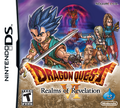
Nintendo DS box art. (NA)
Nintendo DS box art. (Europe)
.png)


Merchandise

Super Famicom guide 1.

Super Famicom guide 2.

Character Poster from V-Jump magazine.

Intro page from V-Jump magazine.


V Jump guide.
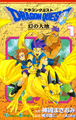
Maboroshi no Daichi manga Vol. 1.

Maboroshi no Daichi manga Vol. 2.

Maboroshi no Daichi manga Vol. 3.

Maboroshi no Daichi manga Vol. 4.

Maboroshi no Daichi manga Vol. 9.

Maboroshi no Daichi manga Vol. 10.

4koma comics.

CD Theater.

CD Theater.

Super Famicom cover art.


Michikusa guide.

iOS/Android.


