Dragon Quest V: Hand of the Heavenly Bride
| Main series games | |
|---|---|
| Hand of the Heavenly Bride | |
  | |
| Developer(s) | Chunsoft ArtePiazza, Matrix Software (PS2) ArtePiazza, Cattle Call (NDS) |
| Publisher(s) | Enix Corporation (SFC) Square Enix (PS2, DS) |
| Designer(s) | Yuji Horii |
| Artist(s) | Akira Toriyama |
| Composer(s) | Kōichi Sugiyama |
| Series | Dragon Quest |
| Platform(s) | Super Famicom, PlayStation 2, Nintendo DS, Cell phone |
| Release date(s) | Super Famicom JP September 27, 1992 PlayStation 2 JP March 25, 2004 Nintendo DS JP July 17, 2008 NA February 17, 2009 EU February 20, 2009 AUS February 19 2009 Cell phone JP December 12, 2014 NA January 22, 2015 |
| Genre(s) | Console role-playing game |
| Mode(s) | Single player |
| Rating(s) | CERO: A (PS2, NDS) ESRB: E10+ (NDS) PEGI: 12+ (NDS) |
| Media | 16-megabit cartridge (SFC) DVD (PS2) Nintendo DS Game Card |
| Original price | 9,600円 |
Dragon Quest V (ドラゴンクエストV 天空の花嫁 Doragon Kuesuto Faibu: Tenkū no Hanayome, lit. Dragon Quest V: Bride of Heaven) is the fifth installment in the Dragon Quest series, and the second of the Zenithian trilogy.
Dragon Quest V was the first of two games in the main series in which certain monsters from random encounters may offer to join the player's party. This concept was an inspiration for the Pokémon video game series, which debuted several years after Dragon Quest V's release. Later, the same feature would spawn the Dragon Quest Monsters series in 1998.
Setting[edit]
Dragon Quest V is set centuries after The Zenithian Hero defeated Psaro the Manslayer in the previous installment. The game starts on a sea vessel, with The Hero and his father departing to go to Whealbrook.
The layout of the world is superficially similar to the layout in Dragon Quest IV, but with a new set of locations, and considerable geographic alteration. The Stairway to Zenithia and Zenithia Castle itself are the only surviving locations from the previous game, and they have fallen into ruin and are no longer connected. The overworld has different monster encounter tables for each of the three eras.
The quest takes The Hero and his party to many exotic locations, such as a fairy village, a mansion made of ice, several caves, and even the depths of a volcano. The party eventually makes its way to the castle Zenithia, the hallmark of each game of the Zenithia trilogy. Like a few other Dragon Quest games, the final enemies reside in a dark world, separate from the main map.
Plot[edit]


Dragon Quest V begins with a brief scene of The Hero's birth in which the player gives The Hero a name. After that scene, The Hero finds himself in a room on board a ship with his father, Pankraz. After the ship stops at Littlehaven (ビスタ Bisuta), they leave the ship for Whealbrook, where Pankraz's friend Sancho lives. Upon arrival, The Hero meets Bianca Whitaker. After exploring the cave behind Whealbrook, he and Pankraz accompany Bianca to her town Roundbeck. Upon arrival at that town, Bianca and The Hero explore the haunted castle Uptaten Towers (レヌール Renūru), where they obtain a mysterious Gold Orb. Afterwards Pankraz and The Hero return to Whealbrook, along with a pet tiger named Saber (ボロンゴ Borongo), a monster that was saved from bullying by The Hero and Bianca.
The next day, The Hero notices a man in the town who looks very similar to him. That man asks The Hero to show him the Gold Orb and, after returning it, asks him to take care of his father Pankraz. Elsewhere in town, he finds the spirit of Honey, who asks him to return with her to her country, the snow-covered land of Faerie Lea. Upon arriving there, the two defeat the Winter Queen to allow Spring to return to the land. After accomplishing this feat, The Hero, Pankraz, and Saber travel to the eastern kingdom of Coburg (ラインハット Rainhatto), where the Hero befriends Prince Harry (ヘンリー Henrī). However, Harry is kidnapped, forcing The Hero and Pankraz to rescue him. Once The Hero finds Harry in a nearby hideout, they are attacked by a duo of powerful monsters, in which Pankraz defeats, but then a third entity appears and threatens The Hero's life, forcing Pankraz to give in. In the process, Pankraz is killed by powerful monsters, the Gold Orb is destroyed, and The Hero and Harry are sold into slavery.
The story continues ten years later, and the player finds that The Hero and Harry have grown up working on a giant temple. They get into a scuffle with the guards after seeing a girl named Maria (マリア Maria) being whipped; the three of them are released from the temple and sent drifting to the Casino town of Fortuna (オラクルベリー Orakuruberī) by Maria's brother. Here The Hero and Harry discover that Whealbrook has been destroyed by the armies of the Queen Dowager of Coburg, who has been acting as regent for Harry's half-brother Wilbur. Upon paying a visit to his homeland, Harry discovers that his stepmother has been replaced by a monster. After unmasking the fake queen using Ra's Mirror and defeating the monster, Harry and Maria marry and become an advisor to the king.
Afterwards, The Hero travels to the western continent, where he meets up with Saber once more, and travels to the town of Mostroferrato, where the wealthy nobleman Mr. Briscoletti and his daughters Nera and Debora live. He sends The Hero on a quest to retrieve two magic rings of fire and water as a test of his worthiness as a suitor for Nera. The Hero is able to accomplish this task only with the aid of Bianca, who he meets in a nearby village. Afterwards, Mr. Briscoletti offers The Hero the chance to marry Nera, but it is also possible for him to marry Bianca or, more surprisingly, Debora instead.
After the marriage, The Hero takes his bride through a great mountain path that leads to his homeland of Gotha. Upon their arrival, Sancho is shocked to see the Hero and his wife, and immediately takes them to see the current King of Gotha--Albert, the younger brother of Pankraz. The Hero must undergo a Riteof Passage before he can assume the throne, while his wife, now revealed to be pregnant, rests. During the coronation celebration, The Hero's wife is kidnapped, but the newly-born twins are safely hidden.
The Hero rushes to save his wife, but upon defeating the powerful monsters who kidnapped her, both The Hero and his wife are cursed and turned into stone; they remain this way for eight long years.
The Hero is found by his two children, now grown, and Sancho in the garden of a wealthy man's estate and is revived and taken back to Gotha castle. They still have not found the wife, but they have a lead on the whereabouts of The Hero's mother: she was from the town of Lofty Peak on the continent north of Gotha. The Hero goes there, finds more information, and procures a magic carpet and Magic Key. Travelling the world to collect the legendary "Heavenly" or "Celestial" armaments for The Legendary Hero, it is discovered that the The Hero's son, Parry is indeed The Legendary Hero sought by Pankraz almost twenty years ago.
During this stage of the journey, The Hero avenges Pankraz by killing Slon the Rook and restores the Zenith Dragon, as well as his flying castle, to their proper homes in the sky. To accomplish this, The Hero has to enter a time warp to retrieve the Gold Orb from his child self. The Hero, older and wiser, attempts to talk Pankraz out of going to Coburg to his demise, but he does not heed the warning.
After returning to the temple The Hero helped build as a slave, the Zenithian armour is found, as well as the statue of his wife. He then must go defeat King Korol in order to remove the curse from his wife, and retrieving the Circle of Life in the process. After the final source of evil is eradicated from the world, the party is told that Madalena remains in Nadiria, trying to contain the Grandmaster of the Underworld, Nimzo (ミルドラース Mirudorāsu). The Hero, his wife, and their children decide to enter the underworld to find Madalena, so together they travel there via the Nadiria Teleportal from the Estuary Sanctuary.
After passing a town of monsters that are transforming into humans, they head to the northern section of Nadiria and reach Mt. Zugzwang. Madalena is found inside, only to be killed off by Nimzo before she can seal his power. The party continues on to confront and destroy Grandmaster Nimzo, ending the threat once and for all. They return to Gotha, and have a joyful party. As the family celebrates, Pankraz and Madalena watch their son and his family from the heavens, happy and content with their progeny.
After beating the game, players can gain access to the bonus dungeon: Estark's Labyrinth, where the party can test their skills against an ancient demon sealed away by Nimzo out of fear. Dragon Quest V was the first main series Dragon Quest game to have a bonus dungeon (although the later remakes of Dragon Quest III and IV added bonus dungeons similar to later titles).
Characters[edit]
- The Hero is, in the early chapters of the game, a six-year-old boy who travels all around the world along with his father, Pankraz. Though a child, he will become a capable warrior in his own right through exorcizing a haunted castle and saving the realm of the faeries from perpetual winter. After the tragic death of Pankraz at the end of the first generation, The Hero is forced into slavery, undergoing hard labor in the building of a temple. Ten years after, he finally escapes from there, and he starts a journey to find his mother, Madalena, who was rumoured to have been kidnapped soon after The Hero was born. He will also search for The Legendary Hero that his father sought to find, and along the way discover love in the form of a Heavenly Bride.
- Pankraz is the father of The Hero. Though he was once the king of Gotha, he left his homeland to search for The Legendary Hero and his vanished wife. His attendant, Sancho, goes with him on his journey and resides in Whealbrook early in the game. He is a stern but kind man, with nearly all associated NPCs speaking very highly of him. In his travels, he keeps his kingly status a secret to avoid detection.
- Bianca Whitaker is a daughter of the innkeepers of Roundbeck and the childhood friend of The Hero. When The Hero and his father visit her in Roundbeck, she drags him off on a ghost-hunting dare to save a bullied Saber cub from its aggressive owners. After growing up, she moves to a small village for recuperation of her injured father and matures into a kind and energetic countrywoman, becoming one of the women whom the player can choose to marry.
- Nera Briscoletti is a daughter of Rodrigo Briscoletti, who recently got back from domestic goddess training at Heaven's Above Abbey. She is the second choice for becoming The Hero's bride. Her father, Rodrigo Briscoletti (ルドマン Rudoman) is a wealthy man living in Mostroferrato (サラボナ Sarabona). He seeks his daughter's bridegroom, but will only accept a man who is able to pass his trial. Crispin Burns (アンディ Andi) a friend of Nera's, also desires to marry her.
- Debora Briscoletti is the older daughter of Mr. Briscoletti. She is introduced in the DS remake and is a 3rd bridal candidate, however being a temperamental and spoiled girl, her parents have no real hope of finding her a suitor.
New features[edit]
Dragon Quest V follows in the footsteps of IV by virtue of continuing Yuji Horii's narrative experiments. Rather than dividing the game into chapters focusing on several characters, the story exclusively follows the life of the person from childhood to adulthood, and finally to parenthood. This divides the game into 3 separate generations, with the world and characters ageing along with the protagonist. The nature of traversing the world's towns and combating monsters is still the same as in previous titles, but with the introduction of a well lauded addition to the series:
Monster recruitment[edit]
The largest gameplay addition was the inclusion of a monster recruitment system. Under this system, certain monsters may elect to join the player's party after being defeated in battle. These monsters then behave as typical player characters who can Level up, use equipment, and receive orders/tactics in battle, but will often have abilities and resistances unavailable to human characters. This new feature adds a great deal of replay value as it exponentially increases the number of possible party configurations a player can use.
In the original Super Famicom Version, only 42 monsters were recruitable and 70 was the limit for how many could be kept in total. In the current DS and Cell phone versions, these limits were raised to 72 recruits and 80 spaces respectively.
The monster recruitment system serves a very useful practical purpose in V, as Harry is the only other party member when it is introduced, and he eventually leaves the party. Aside from the Hero, there are no other permanent human party members until the Hero's wife much later in the game. This may be why the recruitment system was greatly pared down for Dragon Quest VI: Realms of Revelation, whose narrative needed it less, and eliminated for the more character-driven later entries like VII, VIII, and XI, as well as IX for reasons that are less clear. Later games would have nods to the feature, such as monster hearts in VII, Morrie's Place in VIII or the Monster Wrangler vocation in the Dragon Quest III HD-2D Remake, but this genre-spawning mechanic would never return to the main series after VI.
Player conveniences[edit]
- This game was the first to use katakana and numbers to name characters; earlier 8-bit games had only allowed the use of hiragana. Also, message windows can now display kanji. This significantly expanded the amount of text that could be stored to a cartridge without eating up space saved for music, graphics, and so forth, with the original advertisements stating the game had as much text as a novel.
- Search, Talk, and Open commands can now be issued by a single button press, bypassing the menu.
- The shop interface now shows what stat changes will occur when a weapon is equipped, and purchased items can be equipped automatically.
- Characters can now move a half-block tile at a time rather than only a full block, leading to smoother animation.
- Pots, barrels, and similar objects can now be searched, and will often contain useful items. Unfortunately, this also meant that they sometimes contained monsters laying in wait.
Battle refinements and balancing[edit]
- For the first time, any character who is targeting an already-defeated monster will have their target automatically transferred to one of the other monsters (selected at random). In earlier games, the action was simply cancelled and the turn wasted.
- More advanced party artificial intelligence than the previous game. An A.I. controlled character is now guaraunteed to "learn" a foe's resistances and vulnerabilities by the third turn of a battle with no exceptions, avoiding infamous snafus such as a character wasting turns casting Whack on a boss monster. It is also possible, unlike in the previous game's original version, to set characters to manual command and allow them to be controlled individually as in the first three games.
- There is now a separation of spell resistances for monsters. In previous games, all spell resistance was based around accuracy, whereas in V an offensive spell's resistance is now calculated as damage reduction, thus preventing a caster from completely wasting their MP unless the foe is immune. This would set the precedent for resistances in all future titles and side games.
- There is now a distinct defensive stat in Resilience, determining a character's base defence; in earlier games the base defence was calculated from Agility. This was implemented on human characters because monsters have always had separate Agility and Defence stats in the previous games, and introducing tamable monsters without addressing this discrepancy would only confuse players.
- Armour and shield resistance is now based on static number subtraction instead of a percentage. For example, the Magic shield will always reduce damage dealt from Sizz by 7 points.
- Boomerangs and Whips can now attack groups of enemies. This feature leads to some weapons being replaced in remakes of older titles to avoid inconsistency.
- Some traditional spells had their effects slightly altered, such as Kabuff improving Defence by 25% instead of 50%.
- The Zoom spell can only be acquired at a certain stage of the plot (in the first half of the second generation); it cannot be acquired by leveling, and if a monster recruit learns this spell, the spell will not appear until after the plot event occurs. This marks the first time in the series that spell acquisition has been tied to story events.
- Background images return to the combat screen, reminiscent of the first game. The images depend on the local terrain and time of day, and feature animations such as clouds rolling through the sky. Also, attacking a monster or casting an offensive spell will produce a matching animation.
- The mechanism for replacing characters with reinforcements from the wagon was changed. It no longer takes a turn for a character to be swapped with one in the wagon, and it is possible to replace all characters at once. This significantly changes battle strategy, especially against major bosses. To balance this, several bosses possess much higher stats than were featured in previous games--HP in particular.
- The original SFC Version only allows 3 active party members instead of 4; a 5-person wagon is still available, however. The PS2 and DS remakes restored party size to 4.
New types of vehicles[edit]
In addition to the typical sailing vessel and flying mount, there are several additional modes of fantastical transportation. These new crafts carry their own restrictions but offer more intricate exploration.
- Flying Carpet: This whimsical rug can travel on grass, water, and shoals, and will suppress wandering monster encounters due to its high speed. It can be carried as an item, allowing it to be used anywhere where there is a sufficient region of grass to take off. However, it cannot travel through forests, so a line of forest inside a line of water (or vice versa) remains an impassible barrier.
- The Sky Castle: The home of the divine Zenithians can fly over any terrain; but it cannot reach or pass the high mountain on the central continent where the Great Temple of Crocodilopolis is located. It can only land or take off from grass or desert (and only large areas of grass/desert, due to its size). The Zoom spell will not relocate the castle since Zoom directly transports the party into its control deck.
Knick-knacks[edit]
Introduced in the PS2 version, these locally-flavoured baubles provide an additional side-quest. Throughout the game, many special items called Knick-knacks may be collected by the player. These items can be displayed in a special museum that will come under the ownership of the protagonist; NPCs will be attracted to the museum once it has exhibits, reminiscent of the boom town featured in other titles. Some special products will be upgraded by certain plot events, and can even be used as equipment in battle. Knick-knacks are unrelated to the overall plot of the game and exist only as a sidequest, but they offer a glimpse into the everyday life of an NPC that other games attempt to illustrate.
Remakes[edit]
PS2 remake[edit]
In 2004, a PlayStation 2 remake of Dragon Quest V was released in Japan on March 25, and included a preview video of the prototype version of Dragon Quest VII. The remake was developed by ArtePiazza and Matrix Software, the former of which would go on to supervise remakes of nearly each title in the series for the Nintendo DS and 3DS. It features 3D graphics that are similar in style to Dragon Quest VII, but it utilizes the extra PlayStation 2 graphical capabilities for more detailed polygonal models and textures and the soundtrack was performed by the NHK Symphony. The remake actually uses an earlier version of the DQVIII engine developed by Level-5, making the only instance of a hardware's remake title launching before the next main entry.
In addition to truly bringing the series into the third dimension after the limited scope of the seventh game, the PS2 remake of Dragon Quest V also adjusted the scenario and balance of the game with the following features:
Scenario changes[edit]
- Rodrigo Briscoletti & Nera appear at the beginning of Generation I as The Hero and Pankraz leave the ship in the game's opening scene.
- There are now 10 possible names for the Great sabrecub, instead of 4.
- There are now Treasures n' Trapdoors boards as seen in in the SFC remake of Dragon Quest III: The Seeds of Salvation.
- Harry helps The Hero to fight the Slave-drivers instead of idly standing by.
- In the Super Famicom Version, Nera cannot be controlled by the player directly in Generation II and could only go up to Level 10. The remake removes both limitations.
- Bishop Ladja now plays a more significant role in the plot, appearing three more times than in the original.
- In the SFC Version, losing to Ladja in Generation I scripted battle resulted in the player losing their gold coins, whereas the remake removes that penalty. The gold is regained after escaping Crocodilopolis at the beginning of the second generation.
- An entirely new feature to the series is the "Knick-knackatory," where the player has to collect local specialties from all around the world, return the items back to a museum run by a character named "Old Man Nick Knack," and receive rewards for them.
Gameplay[edit]
- There can now be 4 active party members in battle, instead of 3. Enemies appear in larger groups, even in the early parts of the game when there are 3 or fewer party members anyway.
- The AI modes are updated to match the ones used in Dragon Quest VII: Fragments of the Forgotten Past, and individual characters can be assigned different strategies.
- Stat gains on Level-up are now semi-randomized, staying within a fixed range instead of having the same increments per level.
- Party Chat is now implemented, with human characters having full dialogue and monster companions alternating between two sentences.
- The Bag is available from the start of the game; so the Vault is replaced with a Bank.
- Items now sell for 50% of their purchase price, instead of 75%.
- Pots, barrels, and similar objects can now be picked up and thrown.
- The casino now offers poker in addition to its other games; the party's Slime companion, if any, can be entered in the Slime Race.
- The first-level ice spell, Crack (Hyado), can now be cast by the Hero's daughter Madchen and a select few monster allies; in the original game there was no way to obtain it.
- The effects of stat-buffing spells now expire after a certain number of turns.
- The "Paralysis" status effect will now wear off after 6~9 turns.
- Helmunaptra and Dominicus' Dominion have been added to the Zoom list.
- The Duplic hat item has been removed.
Monster-specific changes[edit]
- Monster companions can now have their names changed.
- The Monster Depository can now store 200 monsters instead of 50.
- There are now 70 potential species of monster companion, instead of 42. Including monsters that were present but unrecruitable, including:
- Some new monsters added (all recruitable) include:
This version was met with wide-spread acclaim, with first day sales of 722,000. As of 2018 the game has sold 1.64 million copies, making it the top selling Dragon Quest remake game of all-time, and is available in Japan as a Square Enix Ultimate Hits title. International fans had hoped that this version would be released overseas to capitalize on the success of Dragon Quest VIII and the popularity of the PlayStation 2 hardware, but Square Enix passed on the opportunity and would release the Nintendo DS version instead to release each entry in the Zenithia trilogy on the same hardware world wide. In response, a fan translation of the PS2 version was completed by DQ Translations in 2010.
DS remake[edit]
A Dragon Quest V remake for the Nintendo DS was announced in late 2007 by Square Enix and was developed by ArtePiazza. The game uses the same engine as the DS remake of Dragon Quest IV. On April 23, 2008, it was reported that Square Enix has applied for the trademark "Hand of the Heavenly Bride" at the United States Patent and Trademark Office. It was confirmed to be in reference to Dragon Quest V by a listing from Nintendo of third-party titles for Nintendo platforms. On the following day, Square Enix sent out a press release saying that the game will be released in Europe under the name Dragon Quest: The Hand of the Heavenly Bride.
The DS remake includes all the features of the PS2 remake, such as the expanded party size, plus a few additional changes:
- A third Heavenly Bride is introduced: Debora Briscoletti, the older sister of Nera. Unlike the other two brides, Debora is temperamental and intimidating, generally scaring off all potential suitors. Due to her aggressive personality, she is more of a physical fighter than the other brides, and can equip a wider selection of weapons.
- Debora appears along with Rodrigo & Nera at the start of Generation I.
- A new mini-game called Bruise the Ooze can be played, utilizing the DS stylus.
- The amount of monsters that appear in battle has been reduced to accommodate for the handheld's smaller screen size, though more are still displayed than in the 16-bit version.
- The limit of monsters the player can recruit has been reduced from 200 to 80, accounting for the DS' hardware limitations.
- Two more monsters are added and recruitable: the Archdemon & Jailcat.
- Great sabrecubs are no longer encountered in the game, leaving Saber to be the only one.
- Healing spells known by Pankraz and Honey can be used out of battle during the first generation.
- The Stairway to Zenithia now more closely resembles the version seen in Dragon Quest IV.
- The Neverglade has returned to a screen-by-screen-based puzzle instead of the endlessly scrolling map seen on the PS2.
Mobile Phone port[edit]
Released in Japan on December 12, 2014, and over seas on January 22, 2015, this version is an enhanced, smoother looking port of the previous DS version. All features have been retained, with a few interface and presentation changes:
- Script alteration to reflect new control input.
- Smoother frame rate.
- Graphical upgrade.
- Improved audio quality.
- Reduced character sprite size in towns and the world map, making the game appear approximately 20% larger.
- Zoom and Evac's MP cost have now been reduced to 1 MP each.
- The creation and trading of personalized Knick-knacks between players has been removed, as well as the Church in the Knick-knackatory.
- Increased number of rolls for TnT boards.
Additionally, the Japanese version featured a promotional campaign that allows players to register other DQ products in return for items and equipment not previously featured in V, such as the Gigant armour and Dragon robe. On July 5, 2019, the game was updated with an accessory called Monster magnet which can provide the Hero with +5 Defence and increase the chance of monster recruitment. As of the update, the item can be purchased in the Casinos for 20,000 tokens. The accessory was made available worldwide in celebration of the release of Your Story.
Soundtrack[edit]
Kōichi Sugiyama composed the music and directed all the associated spinoffs. A compilation of Dragon Quest V's music was put on the album Dragon Quest V ~Bride of the Heavens~ Symphonic Suite, which was released in 1992 and then again in 2000. The first version features an extra disc with the original soundtrack as well as the symphonic one. Here is the track listing of the Symphonic Suite:

| No. | Title | Length |
|---|---|---|
| 01 | Overture (序曲のマーチ) | 1:59 |
| 02 | Castle Trumpeter (王宮のトランペット) | 2:21 |
| 03 | Melody in an Ancient Town ~ Toward the Horizon ~ Casino ~ Lively Town ~ Melody in an Ancient Town (街角のメロディ ~ 地平の彼方へ ~ カジノ都市 ~ 街は生きている ~ 街角のメロディ) |
7:50 |
| 04 | Magic Carpet ~ The Ocean (空飛ぶ絨毯~大海原へ) | 7:39 |
| 05 | Melody of Love (愛の旋律) | 3:00 |
| 06 | Monsters in the Dungeon ~ Tower of Death ~ Dark World ~ Monsters in the Dungeon (洞窟に魔物の影が ~ 死の塔 ~ 暗黒の世界 ~ 洞窟に魔物の影が) |
6:20 |
| 07 | Violent Enemies ~ Almighty Boss Devil Is Challenged (戦火を交えて ~ 不死身の敵に挑む) |
5:44 |
| 08 | Noble Requiem ~ Saint (高貴なるレクイエム ~ 聖(ひじり)) | 5:53 |
| 09 | Satan (大魔王) | 4:52 |
| 10 | Heaven (天空城) | 2:57 |
| 11 | Bridal Waltz (結婚ワルツ) | 3:39 |
Development[edit]

The announcement of Dragon Quest V came in in Autumn of 1988, approximately a year and a half before the release of Dragon Quest IV. The news came not from Yuji Horii or any Enix emlpoyee, but from Hiroshi Yamauchi, the president of Nintendo, who boasted that the title would be developed exclusively for the upcoming Super Famicom during a press conference. Neither Horii, nor any staff at Enix or Chunsoft for that matter, had received spec sheets or development kits for the 16-bit hardware; the "announcement" was simply part of an aggressive marketing campaign on Yamauchi's part to counter the steep competition that Nintendo was facing from Sega and NEC through the launch of their 16-bit consoles, the Mega Drive and PC Engine. Yamauchi's claim was addressed in an article published in issue 59 of Famitsu magazine, which quoted an Enix representative putting the rumor to rest[1]. Later that December Famitsu would briefly interview Horii for his opinion on the rumor and his thoughts on the upcoming hardware, with Nintendo having revealed the preliminary specs during the interim months. He was greatly impressed, praising the S-video and RGB output as well as the display pallet of 256 colors compared to the Famicom's scant 25, and declared that ideas he had been forced to abandon due to hardware limitations would finally be possible on the new console[2].
Despite Horii's praise of Nintendo's next generation hardware, production of Dragon Quest V began on the original Famicom in October of 1989, right after the master ROM of Dragon Quest IV was completed. This was approximately four months before the launch of the fourth title, and nearly a year before the launch of the Super Famicom. As such, development on the 8-bit Famicom continued for a year until the growing scale of the game would necessitate the use of the Memory Management Controller 5, an enhancement chip that greatly expanded the capabilities of the aging console and was most frequently put to use by developer Koei. The problem was that using the chip would inflate the price of Dragon Quest V to 14,000 yen―nearly as expensive as a Famicom itself. The decision to move the project on to the Super Famicom came from Enix in November of 1990[3] and was made after taking this unattractive price into consideration along the Super Famicom hardware being able to natively handle the projected scope of the game without any additional chips. The Super Famicom's use of the Ricoh 5A22 CPU made adapting the game to the new console easier than it could have otherwise been due to the hardware's structure being similar to the Ricoh 2A03 used in the Famicom. That being said, the process was still far from painless; in a 2023 interview with Note.com Koichi Nakamura explained that the staff at Chunsoft had grown quite familiar with the intricacies of the Famicom, utilizing clever tricks as to force a larger colour pallet and making full use of the regular Memory Management Controller to handle bank switching without straining the machine[4]. The move to the Super Famicom was discouraging as it meant abandoning those tried and true techniques on top of losing a whole year's worth of programming work, but at the same time the sheer freedom of the more powerful hardware inspired the staff's creativity.
The Super Famicom's ability to display crystal clear kanji greatly enhanced the amount of information that could be conveyed through a single text box compared to the Famicom, with the older machine only being able to display hiragana and select katakana in most instances. This feature serendipitously tied in with the key development goal for Dragon Quest V to have a stronger narrative focus than in past titles; when the game finished production it boasted a script that filled six binders 8-cm thick and, when including various data files, filled ten binders at 2,800 pages in total.
The game's defining feature, the three-generation structure centered on one family confronting the forces of Hell, was born from Horii's impish desire to torment players with a difficult choice―one that would have lasting ramifications on the game's story and give players cause to contemplate their decision more seriously than they had been prompted to in past RPGs[5]. From this the idea of the Hero choosing his bride came forth and Horii found himself writing the game's story as tale of a boy growing into adulthood and becoming a father[6]. Horii briefly toyed with the idea of changing the game's protagonist with each generation, but found it more satisfying for there to be a single Hero who matures over the course of the journey. The tragedy of the Hero's enslavement and later petrification were decided upon after much debilitation, with the goal of the Hero entering the different phases of his life in a speedy manner so as to not cause the game's tempo to slow. Horii's personal dissatisfaction with how time-skips are usually handled in media by way of simply stating that the story now takes place years later via intrusive narration also contributed to the decision, though this did lead to the criticism of the Hero's circumstances simply being too cruel[7]. The system where defeated monsters can be recruited as allies came about due to the nature of the game's story leaving the Hero without a consistent set of companions for much of the adventure, and due to the highly positive feedback that Healie the friendly healslime received as a companion character in the first chapter of Dragon Quest IV[8].
The game's battle system saw a major overhaul due to the addition of these recruitable monsters, as large disparities existed between how human characters and enemy monsters handled physical damage reduction and elemental resistance. Enemy monsters used separate agility and defence attributes since the first game, where as the human characters had no distinct defence attribute at all―a character's physical durability was derived from half of his or her agility with equipment bonuses layered on top of that. Several monsters were quick and fragile while others, such as the rockbomb, were durable and slow, which would create a schism if they were forced to use the same calculations as human characters when rcruited. Furthermore, through the use of armour and shields, human characters handled elemental resistance by lowering the damage taken while monsters used a stochastic system where any degree of resistance meant a beast had a chance to avoid taking any damage from an attack spell outright. Failing to rectify these large disparities would have led to confusion for the players when a freshly recruited monster did not perform in battle as it had when it was an enemy, such as the aforementioned rockbomb suddenly becoming comically brittle due to it's low agility. This would have rendered the game unrefined compared to it's predecessors and as such the development team abolished the old structure for a more intuitive system where human-characters separated their defence from their agility while monster elemental resistance shifted from evasion to damage reduction for both enemies and recruited allies alike. The latter change proved to be a major boon to the game's artificial intelligence system, as AI-controlled characters could now determine exactly what the damage output of an elemental spell or skill would be based on a monster's resistance instead of simply gambling on said ability landing in the first place.

The game was formally announced in the volume 50, 1990 issue of Weekly Shonen Jump. The blurb revealed Akira Toriyama's illustrations for the Hero and Saber along with descriptions of the game's features. Toriyama did not design the game's entire cast this time around, however, with Nera, Harry, Maria, Prince Albert, Princess Gertrude, the Zenith Dragon, Honey, the Winter Queen, and even the Hero's adult self being created by Chunsoft employee Hazuki Kurikara before Toriyama finalized their designs for style consistency. Kurikara would later reveal through a post on his x.com account that the graphical presentation of the game underwent a considerable change at one point in development due to a variety of undisclosed circumstances. The character's overworld sprites were 50% larger in the prototype than in the final product, and environment sprites possessed several animated details to convey a sense of natural beauty and vitality: sunlight filtering through the trees of forests, roaring fireplaces with smoking chimneys, and water droplets dripping from stalactites among other touches.
PlayStation 2 remake[edit]
The PlayStation 2 remake was announced in October of 2003, being developed by Arte Piazza concurrently with Level-5 working on Dragon Quest VIII. Many of the features added to the series in Dragon Quest VII were implemented in this remake, such as the bottomless bag for more efficient item storage, AI battle strategies being assigned to specific characters instead of the entire party at once, and newly written Party Chat dialogue for each human companion. Taking advantage of the storage capacity of DVDs, the amount of recruitable monsters was raised from 42 to 70. The battle party was also expanded from three characters to four, which was balanced out by the PS2 being able to display more monsters on screen than the Super Famicom could. Scenario additions included minor alterations such as the Hero encountering Nera during the game's opening in Littlehaven, but the overall story structure remained the same.
Nintendo DS remake[edit]
The Nintendo DS remake was revealed in 2007 when it was announced that the Zenithia Trilogy would be remade for Nintendo's dual screen handheld. It was developed by Arte Piazza alongside Dragon Quest IV and is based on the PS2 version, with all of the previous remake's additional content being retained. As the Nintendo DS was a weaker piece of hardware compared to the PlayStation 2, new content was planned for the second remake to increase the product value so as to not appear to simply be coasting by on the novelty of portability and to account for only four years passing since the release of the previous iteration. To this end the character of Debora Briscoletti, Nera's older sister, was created as a third heavenly bride candidate. Debora was designed to be a spitfire of a woman with zero conversation filter[9] who would shock returning players and make them wonder who would ever choose her as a bride[10], with that curiosity prompting players to take a chance on her marriage route and thus have a fresh experience. Furthermore, the Nintendo DS cartridge size allocated space for three adventure logs and thus players could make use of all by choosing a different bride per log[11].
Credits[edit]
| Role | Staff |
|---|---|
| Scenario & game design | Yuji Horii |
| Character design | Akira Toriyama |
| Music composer | Kōichi Sugiyama |
| Director | Manabu Yamana |
| Chief programmers | Kenichi Masuta |
| Togo Narita | |
| Programmers | Masayuki Kawamoto |
| Takashi Kawashima | |
| Hyoji Shinohara | |
| Jinji Horagai | |
| Yasushi Watanabe | |
| Jun Sakamoto | |
| Masumi Takimoto | |
| Hitoshi Ohori | |
| Masaya Hashimoto | |
| Kouhei Tamura | |
| Masashi Hijikata | |
| Chief graphics designer | Satoshi Fudaba |
| Graphics designer | Takashi Yasuno |
| Junichi Gouda | |
| Kumiko Harada | |
| Kouji Yokoya | |
| Shintaro Majima | |
| Sound Programmer | Tadashi Fukuzawa |
| Takenori Yamamori | |
| Chiyoko Mitsumata | |
| Program assistants | Michie Narita |
| Shinji Sasaki | |
| Kazuya Asano | |
| Supervisor | Kōichi Nakamura |
| Scenario assistants | Sachiko Sugimura |
| Kazunori Orio | |
| Fuminori Ishikawa | |
| Shigeya Ueno | |
| Miho Komamiya | |
| Kenji Yanagisawa | |
| Production staff | Daizoh Shimamura |
| Mariko Iida | |
| Yoshinori Yamagishi | |
| Sadao Yahagi | |
| M. Satoda | |
| Taichi Inuzuka | |
| Kenjiro Kano | |
| Yuuchi Kikumoto | |
| Noriko Nakanome | |
| M. Saitou | |
| T. Yasuta | |
| Takashi Ōtsuka | |
| Youichi Hayakawa | |
| Y. Hamada | |
| N. Takamura | |
| N. Ikeda | |
| Mariko Numajiri | |
| M. Oomori | |
| T. Ooi | |
| K. Kurimoto | |
| Yoshiko Hatano | |
| M. Yoshikawa | |
| Katsuya Teshima | |
| M. Yamane | |
| Masahiro Wada | |
| E. Sakai | |
| T. Gotou | |
| Yū Miyake | |
| H. Tanaka | |
| Hajime Iesaka | |
| Ryuichi Moriya | |
| Shigeru Kitaori | |
| Vice producer | Shigeki Maruyama |
| Producer | Yukinobu Chida |
| Publisher | Yasuhiro Fukushima |
Reception[edit]
Like the other games in the series, Dragon Quest V was very popular in Japan. In 2006, the Japanese gaming magazine Famitsu had readers vote on the top one hundred games of all time, Dragon Quest V coming in at 11 and the PS2 remake at number 40. In particular, the way the story is divided by different periods of time has been praised, as it is something that has not appeared in many video games. Dragon Quest V has also been acknowledged as Yuji Horii's favorite in the series, with him citing the appeal of seeing the protagonist grow from child to father.
Trivia[edit]
- The 2011 Japanese TV Drama Yuusha Yoshihiko to Maou no Shiro (勇者ヨシヒコと魔王の城 lit. "Hero Yoshihiko and the Devil's Castle") is a comedy series whose titular character, the Hero Yoshihiko, wears the costume of Dragon Quest V's Hero.[12] The series features many references to the Dragon Quest games, but despite the protagonist's costume it is not actually an adaptation of Dragon Quest V. A second season, Yuusha Yoshihiko to Akuryou no Kagi (勇者ヨシヒコと悪霊の鍵, lit. "Hero Yoshihiko and the Evil Spirit Key"), was released in 2012.[13] A third season, Yuusha Yoshihiko to Michibikareshi Shichinin (勇者ヨシヒコと導かれし七人; lit. "The Hero Yoshihiko and the Seven Chosen Ones"), was released in 2016.
- After the game's release in 1992 rumors quickly spread about it being possible to recruit Estark under various special circumstances, such as defeating him in 10 turns or less. These rumors became so wide-spread that Yuji Horii felt the need to address the situation in a 1993 issue of Weekly Shonen Jump. He also took the opportunity to reflect on some of the other popular rumors the game had accumulated, such as there being a third wife candidate hidden somewhere, and speculated that such a character may be added in a future version of the game[14].
Translations[edit]
Dragon Warrior V was used in 90's media as a reference to Dragon Quest V. In Enix America Corporation's newsletter Warrior World, the company revealed that they had decided against releasing Dragon Quest V as Dragon Warrior V in North America, and were planning to release Dragon Quest VI as Dragon Warrior V. Since Enix America Corporation ceased operations around the same time that Dragon Quest VI was released in Japan, official localization of the SFC title never occurred. The next title in the main Dragon Quest series to be released in North America was 'Dragon Quest VII' as Dragon Warrior VII, during November 2001.
Fan translations of the SFC Version of Dragon Quest V were later completed; both the DeJap/PT translation and byuu's translation were released on December 7, 2001. This translation utilized the spell and monster names codified in the older Enix localizations, but with much less censorship to death, other tragedies, and adult subject matter.
In February 2009, Square Enix released the DS remake, Dragon Quest V: Hand of the Heavenly Bride, the first official release of Dragon Quest V in English. This localization was created by Plus-Alpha, carrying over from their previous work in the series. As such, puns and onomatopoeia are commonplace, along with references to older titles. To great relief from fans, the Party Chat feature was retained for the overseas version, constituting nearly 1/3rd of the game's written script.
Related media[edit]
- Dragon Quest Tenkuu Monogatari (Tale of the Air) is a twelve-volume manga series based on Dragon Quest V by Chino Yukimiya, which ran in 1997 and again in 2001. The story follows Parry and Madchen, the two children from Dragon Quest V.
- Your Story is an animated feature film adaptation of Dragon Quest V. Its first trailer was released on April 3rd, 2019, and the film released in Japan on August 2nd, 2019.
Gallery[edit]
Title Screens[edit]


Cartridge/Disc art[edit]


Box art[edit]

Super Famicom box art. (front)


Box art. (textless)

Super Famicom box art. (back)


DS box art.


Magazine ads[edit]
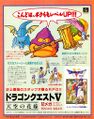
Weekly Famitsu #158, December 1991.
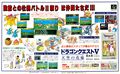
Weekly Famitsu #160, January 1992.

Weekly Famitsu #164, February 1992.

Weekly Famitsu #174, April 1992.


Merchandise[edit]
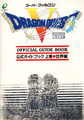
Super Famicom guide.

Symphonic Suite.
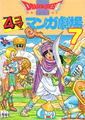
4koma comics.
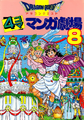
4koma comics.

4koma comics.
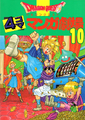
4koma comics.

Tenkuu Monogatari manga v.1.

Tenkuu Monogatari manga v.2.

Tenkuu Monogatari manga v.3.

Tenkuu Monogatari manga v.4.

Tenkuu Monogatari manga v.5.

Tenkuu Monogatari manga v.6.
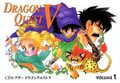
CD Theater.

CD Theater.

CD Theater.

Card game.
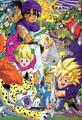
Promotional poster.

PS2 Guide.

PS2 Guide.

iOS/Android advert.

Trading Card Game sleeve.


References[edit]
- ↑ 「以前、うちの社長が任天堂の山 内社長と会ったとき、世間話のな かで、じゃあ、やってよね、って 頼まれたことがあったらしいんで すけどね。そのていどですよ。だ いいち、まだ、「ドラクエIV」のリ リースだってしてないじゃありま せんか」(エニックス 広報) Famitsu issue 59, October 14 1988 page 42
- ↑ かつて任天堂の山内社長が、「ス ーパーファミコンのラインアップ のひとつ」とコメントしたことも あった、「ドラクエV」。スーパー っびょ ファミコンの発表にともない、今 うも く またさらに注目度が増してきてい るわけだが はたして作者の堀井雄二さんは、ト!! 今まであきらめていたことが、 発表になったスーパーファミコン いっぱいできそうですね。え?『ド の仕様を見て、いったいどのよう ラクエV」? もしスーパーファミ かんそう のう な感想を持ったのだろうか!? さ コンの機能をすべていかせたら、ど っそくインタビューを試みたのだ。 んなゲームができるのか? 今はち そううぞう 「いやー、とにかくすこい! 256 よっと想像すらつきませんね。 いや ようう 色使用できて、 S端子やRGB出力 いやー、まいった」 が つきなので、かなりの画面が期待 今まであきらめていたことがすべ できます。しかもスプライトがい て詰まった「ドラクエV」!! ぜひ、 さいだい くらでも並び、最大12メガバイ 遊んでみたい!! Famitsu issue 64, December 23 1988 page 95
- ↑ ――とはいえ、当時はCD-ROMで何かやれ、といった話はあったんですか? 中村 ありましたよ、もちろん。 ――それは「ドラクエ」を? 中村 そうですね。「ドラクエ」も含めて、ですね。(CD-ROMで出すことを)考えましょう、みたいな感じで。 ――すると「ドラクエⅤ(1992年9月)」はファミコンからスーパーファミコン(1990年11月)に変えろと言われつつ、途中にCD-ROM(1990年1月~1991年6月)も…となると、開発側としては本当に大変なタイミングだったと言えますね…。 中村 CD-ROMは(容量の話だけでなく)ちょうどこのあたりぐらいから、3Dグラフィックス的な要素の話も出始めてきたじゃないですか。結構時代が変わっていくな…みたいなのは感じてましたね。 https://note.com/beep21/n/n99b4ae6204cb
- ↑ ――「ドラクエⅤ(1992年9月)」になるとスーパーファミコンになるわけですが。 中村 やっぱりね、ハードが新しく変わるということで、最初かなりもたついた、というのはありました。この頃のファミコンは、「MMC」とかっていう特殊チップで「バンク切り替え」とか、カラーの出し方で新しいチップが入ったやつとかもあって、最初の頃の「ドラクエⅤ」は、実はそっち(ファミコン)で作ってたんですね。もうすでに1年ぐらい(ファミコン版として)開発も進んでいたんですけど、そこからいきなり「スーファミに切り替えよう」という話になって。「ええっ」みたいになったんですよ。結局は、そこからスーファミ版として、開発をし直したんですけど、「(ファミコン版で作っていた)この1年間を返せ」みたいなのはありましたよ(笑)。振り返ると、「ドラクエⅤ」はその最初の作り直しが、やっぱりきつかったですね。でも、結果的には、新しいハード(スーパーファミコン)になったので、今までの開発上の制約はかなり減って。作るほうからすると、それはよかったことではありましたけど。ただ、トータルでは開発期間は(2年半)かかってますよね…。あと「Ⅴ」の時は、新しいメンバーも結構いたので、そこでも苦労はあったと思います。
- ↑ Interviewer: The story forces players to make difficult choices that have long-term consequences. This is a concept that is explored heavily in Western RPGs, but rarely in Japanese ones. Why do you think that is? Is it something you would be interested in purusing in future games? Horii: One of my goals with Dragon Quest V was to "torment" players. I've always been mischievous and enjoy playing tricks on people. In this case, I think my personality just sort of came through in the game. At the time, I have to admit I wasn't thinking about Western RPG trends or what sort of story would be popular. I jsut wanted to get the player as involved in the game as possible. Nintendo Power, issue 238 page 60
- ↑ ――『DQV』では、物語が3世代にわたって描かれるという、壮大なものになりました。それだけでも驚きだったわけですが、なんと言ってもインパクトが大きかったのはやはり結婚です。 堀井 ゲームではあるのですが、プレイヤーの皆さんには真剣に悩んでもらおうと思ったんです。それが『DQV』の出発点でしたね。そこから結婚というアイデアが生まれ、それがあるからこそ、親子三代の物語にしようと思いました。https://archive.ph/Tn7vh
- ↑ 一代ずつ主人公を変えるというアイデアもありましたが、それじゃつまらないと思い、最初は子どもだった主人公が青年になり、そして親になるというストーリーはおもしろいだろうなと考えました。 ――最終的な“勇者”が子どもたちだったというのも含め、ストーリーは驚きの連続でした。 堀井 親子三代の物語にすると決めたからこそ『DQV』で悩んだのは、「どうやって物語の時間を経過させるか」ということでした。悩んだ結果、子どもから大人になるまでは奴隷という立場にして一気に時間を進めて、親になって子どもが成長するまでは石化という形で時間の流れを表現しました。――細々と時間の流れを描くのは冗長になるでしょうし、いっそのこと10年単位で時間を進めてしまおうと。 堀井 ええ。そういう設定なら、よくある「そして〇年が過ぎた……」という部分に、リアリティーが出るかなと思って。 ――そのため、主人公はなかなか酷なことに……(笑)。 堀井 当時から「主人公の状況ってけっこう悲惨じゃない?」という声がありましたね。 https://archive.ph/Tn7vh
- ↑ Interviewer: How did you decide which monsters would be recruitable for players? Do you have any sentimental favorites? Any suggestions for players? Horii: In Dragon Quest IV, feedback from players was really positive regarding Healie, a healslime that joined the party. So in Dragon Quest V, we introduced a full monster-recruitment system. I like all of the monsters, but I usually get attached to the first one that joins my party. I would suggest the slime knight, but my favorite is the walking corpse. Nintendo Power, issue 238 page 60
- ↑ 中川: 最初にビアンカを選んだけど大人になってもう一回やってフローラに変わったみたいな人いないんですか? 最初に選んだ人ずっとビアンカ派のまま生きてきてるんですか? 堀井: いやでも何回も移植してるんで結構リメイクごとに違う人がいたね。デボラ選んだ人もいるしデ。 中川: ボラにも聞いていいですか今せっかくのデボラって黒髪で気が強くって殴る系の女の子ですよねで、結構主人公に対して. 堀井: そうそう。子魚ズケズケですよ。 中川: 子魚ズケズケ! 小魚ったったら, このお二人ともまた違う属性の子を作ろうと 堀井: そうそうそう。 ちょっとね、お互い良い子じゃん。 良い子. https://www.youtube.com/live/t7O_oK98ubI?si=YNuEPLDc4f8ae-un&t=6318
- ↑ Interviewer: What was the inspiration for adding the character of Debora to the DS version of Dragon Quest V? Horii: Since Dragon Quest V had already been remade on the PlayStation 2 in Japan, I wanted to put something entirely new in the DS version. Since Bianca and Nera were very popular as the Hero's choices for his bride, I thought of adding another female character to the cast. But I wanted her to be someone that nobody in their right mind would every pick! It was the perfect opportunity to torment the players just a little bit more. Nintendo Power, issue 238 page 60
- ↑ ――後のリメイク版ではデボラという花嫁候補が増えましたが、当時は結婚相手の選択肢としてふたりがベストという判断だったのでしょうか? 堀井 容量や開発の手間ということもありましたが、やっぱりふたりのうちのどちらかを選ぶという決断を下してほしかった。“冒険の書”を3つ用意していたので、そこはうまく活かしてくれるんじゃないかな、と。『ドラゴンクエスト』はいつでも取り返しがつくように作っているので……取り返しがつかないゲームと思われるのは困りますから(笑)。https://archive.ph/Tn7vh
- ↑ DQ-styled live-action drama Hero Yoshihiko and the Devil's Castle was decided to be broadcasted by TV Tokyo in July 2011 (Japanese language)
- ↑ That popular drama is back! Hero Yoshihiko and the Evil Spirit Key will be broadcasted since tonight (Japanese language)
- ↑ 堀井雄二のゲーム大好き!! II ウソかホントか!?Vのウワサに迫るぜ ドラクエVが発売されてからおよそ半年。Vについての、いろんなウワサを耳にするので、今回は、そのことについて書きたいと思います。 ゲームクリア後に出現するかくし洞くつのことは皆さん知ってると思いますが(エビルマウンテンの下の沼地の所ね)、なんと、そこにいるエス×××を10ターン以内でやっつけると、エス×××が仲間になる!というようなウワサを耳にしました。 いや~、いいなぁ、どうせなら、そういうふうにしておくのだったなぁ。でも残念ながら、10ターン以内でたおしてもエス×××が仲間になることはあり ません。ごめんなさい。 でも、皆さんの希望がまじっているような、こういうウワサは、まったく意味がないこともありません。 というのも、のとき”クリア後、謎の第6章がはじまる"といったウワサが、今回Vのかくし洞くつとなって実現されたのでした。(メモリの関係で第1章ぶんとまでは、いきませんでしたが) そんなわけで、Vについて出 ているウワサ、エス×××が仲間になる、結婚後もある方法で離婚できて第3の女性が登場する、などなど、まだまだいろんなウワサがありますが、それらはもしかして次回作に生かされるかも知れません。楽しみにしててくださいねっ。 → 次回作では仲間にできるかも!?!?!?! Weekly Shonen Jump issue 11, 1993