Dragon Quest VII Reimagined
| Main series games | |
|---|---|
| Dragon Quest VII Reimagined | |

| |
| Developer(s) | Hexadrive Co., Ltd |
| Publisher(s) | Square Enix |
| Designer(s) | Yuji Horii |
| Series | Dragon Quest |
| Platform(s) | Nintendo Switch, Nintendo Switch 2, PlayStation 5, Xbox Series X/S, Steam |
| Release date(s) | Nintendo Switch INT Febuary 5, 2026 PlayStation 5 INT Febuary 5, 2026 Xbox Series X/S INT Febuary 5, 2026 Steam INT Febuary 5, 2026 |
| Genre(s) | Console role-playing |
| Mode(s) | Single-player |
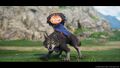
Dragon Quest VII Reimagined is the second remake of Dragon Quest VII, announced on September 12th 2025. Unlike the Nintendo 3DS remake released in 2013 that implemented modest balance adjustments to the original, Reimagined is a total reworking of the adventure that changes several elements to provide a different experience. Certain aspects that were added in the Nintendo 3DS remake have been retained, such as Ruff riding on the back of his adoptive mother and the unnamed Faerie guide dwelling in the Shrine of Mysteries, newly dubbed The Caretaker.
New features[edit]
Presentation changes[edit]
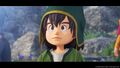
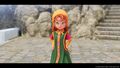
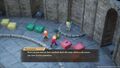
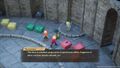
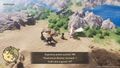
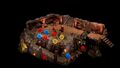
- Characters are displayed in a handcrafted artstyle and the environments are presented as dioramas, not unlike Square-Enix's Fantasian
- The proportionate size of characters in relation to the environments has been returned to the original PlayStation scale, compared to the compressed 3DS version
- A character's weapon and shield are now displayed in battle similar to Dragon Quest VIII and Dragon Quest XI
Character changes[edit]
- Barbatoses now have their usual appearance compared to both prior versions of the games.
Scenario changes[edit]
- The game is considerably more non-linear than before, allowing players to tackle the problems of the past in nearly any order provided the requisite tablet fragments have been found
- Fragment locations have been changed
- New scenarios that elaborate on the Hero and Maribel's childhood have been added
- New scenario featuring an older Kiefer has been added
- A battle arena has been added, with one section including the three archfiends from the Erdrick Trilogy
- Several new monsters have been added to the game's bestiary in addition to the three archfiends, ranging from common enemies such as slimecicles and toadies to boss characters such as Atlas, Robbin' 'Ood, and even Xenlon
Cut content[edit]
- The El Ciclo, Gröndal, & Providence scenarios have been removed
- The casinos, the Excellence Grading Organisation, the Immigrant Town, and Monster Meadows sidequests have been removed
- The vocation uniforms seen in the 3DS version have been removed, with characters retaining their default appearance as in the PSX original
Battle changes[edit]
- All five heroes can now travel together, with the fifth being a backup character to be swapped in at will during battle
- Just like the 3DS remake, random encounters have been replaced with on-screen monsters
- Weakling monsters are instantly defeated upon making contact with the player, similar to Nintendo's EarthBound
- New spells have been added, such as the Crag, Deceleratle, Frizz Cracker, Kerfrizz, & Moreheal spells, and fourth-tier attack spells such as Kaswooshle
- New skills have been added, such as Clap Trap, Hip Drop, Hymn of Light, and Kiss Me Deadly
- Certain abilities have had their MP cost rebalanced, such as Maelstrom taking 16 MP instead of 12
- The Charm, Deftness, Magical Mending, and Magical Might stats have been added
- Shields have a chance to block 100% of a physical attack's damage as in Dragon Quest IX, Dragon Quest X, and Dragon Quest XI
Vocation changes[edit]
- Vocation advancement is no longer based on the number of battles fought while in a given profession, instead using a secondary experience point system where stronger enemies award more points than weaker ones
- New exclusive starter vocations have been added for every character to increase their ability repertoire in the early portions of the game before accessing Alltrades Abbey
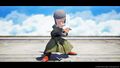
- For example Ruff starts in the Wolf Boy (オオカミ少年) vocation and Aishe begins as Destiny's Dancer
- Characters can now take up two vocations simultaneously in a featured dubbed moonlighting
- All beginner-grade vocations now have passive traits instead of only the Dancer, Martial Artist, Sailor, & Thief
- All vocations now feature exclusive perk abilities that trigger when a character is thoroughly worked up in battle and selects the Let Loose command, ranging from powerful attacks to life-saving buffs
- All spells and skills learned through a vocation are now tied to that vocation, meaning for instance that a Pirate will not be able to perform the Flying Knee skill unless the character is also moonlighting as a Martial Artist. This restriction is stricter than that found in the Nintendo 3DS remake, in which all abilities learned through beginner-grade vocations were permanently available to a character, but it also adds another layer of strategy in assigning vocations and reduces the overabundance of techniques that cluttered a character's command menu in past versions of the game
- The Hero's exclusive spells, The Great Leveller and The Greater Leveller, are permanently tied to him regardless of his vocation
- Monster vocations have been removed and monster hearts have become a new type of accessory that grant monster-themed traits to characters, similar to the Monster Battle Road badges in Dragon Quest X and medals in Dragon Quest Treasures
- The Monster Master vocation replaces the Monster Masher vocation
- Characters can change vocations on the fly after being given the career sphere by High Priestess Jacqueline, which is automatically assigned to a shortcut button. Using it will allow Jacqueline to telepathically change a character's vocation, and in the present her descendant Jacqui will handle the duties
Development[edit]
In a brief video published on the day of the game's announcement, producer Takeshi Ichikawa states that the subtitled of "Reimagined" was chosen as the game changed so much of the original's content. The narrative has been reworked extensively, with new scenarios being added while others were removed to improve the original game's infamous pacing. Yuji Horii notes that searching for fragments is much easier than before. Real-life figurines were scanned to create the in-game models for the six main characters, with the developers dubbing this approach the "diorama style". These figurines were created by Studio Nova, a celebrated atelier company founded in 1970[1], and the studio's work was then used as the template to base the secondary characters and monsters on. A panel previewing the game was held on September 26th 2025 for the Tokyo Game Show, and live-streamed on youtube. During the panel Horii announced which scenarios and features from past versions of the game would be cut for this remake, in addition to showing footage exploring Aeolus Vale.
Gallery[edit]
Promotional images[edit]








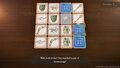



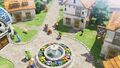
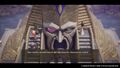






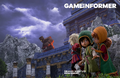
Game Informer cover art

Tokyo Game Show 2025 photo stand, featuring the Dragonlord

TGS 2025 display case housing the dolls used to create the main cast

A wider shot with the entire cast

A close up of the Maribel doll


Studio Nova announcing its involvement with the game

TGS 2025 poster ad revealing several newly added monsters


